

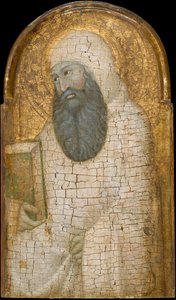
pseudo-palmeruccio
A Shadowy Figure of the Umbrian Renaissance: Pseudo-Palmeruccio The name evokes a mystery, a whisper from the early 14th century—Pseudo-Palmeruccio. Active in Gubbio, Italy, around 1320-1360, this artist remains largely an enigma, known primarily for a single attributed work: ‘Saint Romuald.’ His very designation as “pseudo” speaks to the uncertainties surrounding his identity and oeuvre; he is a painter whose existence we know through one compelling piece, leaving art historians to speculate about his life, training, and broader artistic contributions. Gubbio, nestled in the rolling hills…
The Subject Atlas
A chart of pseudo-palmeruccio's corpus mapped not by date but by subject. Spokes are what they painted; rings are when; and the threads between stars reveal the patrons and places that secretly connect them.
Spokes — Subject
Each arm of the atlas gathers works by what they depict: portraits, sacred scenes, mythologies, and the scientific studies. Click a spoke to swing that cluster to the top.
Rings — Career Period
Distance from the center marks time. The innermost ring is the earliest period; the outermost, the final years. Style matures as you move outward.
Threads — Shared Context
Coloured lines link works bound by the same patron, commission, or theme. Trace a context to watch related clusters light up across subjects.

