

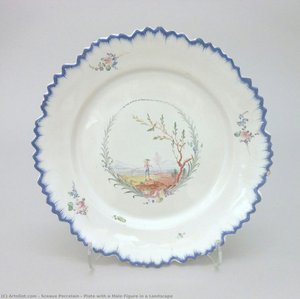
sceaux porcelain
Sceaux Porcelain: A Legacy of Rococo Elegance Sceaux porcelain stands as a testament to the artistic fervor of 18th-century France, specifically during the reign of Louis XV. Established in 1748 by Louis François de Bey and Jacques Chapelle—a partnership that would redefine French ceramic artistry—the Sceaux Manufactory quickly gained renown for its exquisite tin-glazed earthenware and porcelain creations. Unlike the rigid constraints imposed upon Vincennes, the royal porcelain factory established in 1745, Sceaux embraced a more liberal aesthetic, drawing inspiration from the opulent rococo…
The Subject Atlas
A chart of sceaux porcelain's corpus mapped not by date but by subject. Spokes are what they painted; rings are when; and the threads between stars reveal the patrons and places that secretly connect them.
Spokes — Subject
Each arm of the atlas gathers works by what they depict: portraits, sacred scenes, mythologies, and the scientific studies. Click a spoke to swing that cluster to the top.
Rings — Career Period
Distance from the center marks time. The innermost ring is the earliest period; the outermost, the final years. Style matures as you move outward.
Threads — Shared Context
Coloured lines link works bound by the same patron, commission, or theme. Trace a context to watch related clusters light up across subjects.