The Foundation of a Visionary
Born in the coastal serenity of Katthamarsvik, Sweden, in 1835, Axel Herman Haig possessed an innate ability to find the structural poetry within the physical world. His early years were defined by the rigorous discipline of naval architecture and shipbuilding in Karlskrona, a training that instilled in him a profound respect for precision, weight, and the intricate mechanics of construction. This technical mastery would later serve as the essential bedrock for his transition into the broader realms of architectural drafting and fine art. As he moved from the maritime traditions of Sweden to the burgeoning industrial landscapes of Glasgow and eventually to the artistic heart of London, Haig carried a unique perspective—one that allowed him to see the skeletal beauty beneath the surface of every grand design.
The Art of Architectural Realisation
Haig’s career reached its zenith through his profound collaboration with the legendary architect William Burges, where he acted as a vital bridge between conceptual blueprint and visual reality. He did not merely produce drawings; he created
realisations—vivid, atmospheric perspectives that breathed life into the heavy stone and intricate masonry of the Gothic Revival. His ability to translate complex architectural plans into captivating imagery was instrumental in bringing some of the era's most iconic structures to the public imagination. Through his meticulous hand, the grandeur of projects such as:
- Cardiff Castle, where he captured the romantic essence of medieval fantasy,
- The Royal Courts of Justice in the Strand, rendering its monumental scale and intricate detail,
became tangible. Working alongside notable figures like Ewan Christian, Haig’s work as a draughtsman helped define the visual identity of Victorian architecture, turning static plans into epic narratives of stone and light.
A Master of the Etched Line
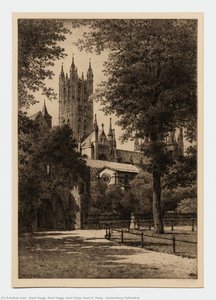
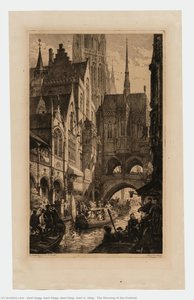
Beyond the structural confines of his architectural practice, Haig emerged as a celebrated master of the etching needle. With an extraordinary repertoire of over four hundred etchings, he demonstrated a remarkable command over the interplay of light and shadow, proving that his artistic soul was as much about atmosphere as it was about accuracy. His prints, which were widely admired in London galleries and featured prominently in English magazines, showcased a delicate, rhythmic precision that captured both the majesty of cathedrals and the subtle textures of the natural world. This duality—the ability to navigate the massive scale of architectural monuments and the intimate detail of a fine line—remains his greatest achievement. Through his etchings, Haig left behind a legacy that continues to enchant, offering a window into a period where technical brilliance and romantic artistry were inextricably entwined.