Badīʿ az-Zaman Abu l-ʿizz ibn Ismāʿīl ibn ar-razāz al-jazarī: The Father of Ingenious Mechanisms
Born in Jazirat Ibn Omar, Turkey, around 1136 and passing away in 1206, Badīʿ az-Zaman Abu l-ʿizz ibn Ismāʿīl ibn ar-razāz al-jazarī – often simply known as al-Jazari – stands as a towering figure in the history of science, engineering, and art. More than just an inventor, he was a polymath, a scholar deeply versed in mathematics and astronomy, an artisan skilled in intricate metalwork, and a visionary whose mechanical creations foreshadowed the dawn of robotics. His legacy isn’t confined to dusty textbooks; it lives on through the breathtaking automata that still captivate audiences today – objects born from his meticulous designs and profound understanding of physics.
Al-Jazari’s life unfolded within the vibrant, multicultural city of Jazira (modern-day Mosul), a crucial crossroads in the Artuqid dynasty's sphere of influence. This strategic location exposed him to diverse cultures and ideas, fueling his intellectual curiosity. While details about his early life remain scarce – largely gleaned from his own remarkable *Book of Knowledge of Ingenious Mechanical Devices* – it’s believed he served as chief engineer for the Artuqid palace in Mardin, a position that afforded him access to resources, patronage, and the opportunity to hone his inventive skills. His father, al-Jazari, was also a renowned inventor and scholar, suggesting a lineage of innovation and a deep appreciation for mechanical principles.
The *Book of Knowledge of Ingenious Mechanical Devices*: A Masterwork
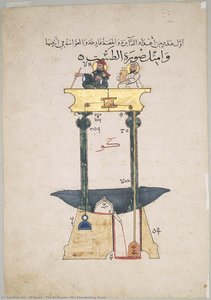
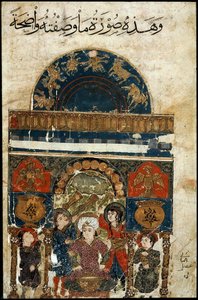
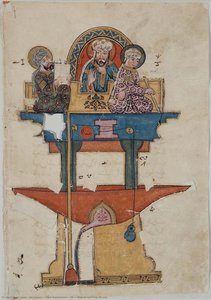
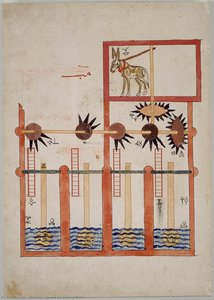
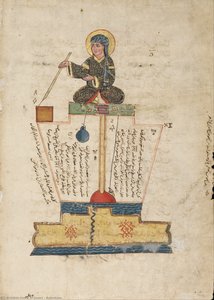
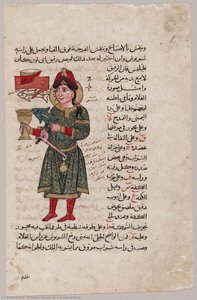
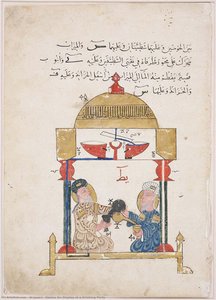
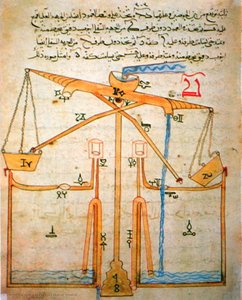
Al-Jazari’s most enduring contribution is undoubtedly his 1206 treatise, the *Book of Knowledge of Ingenious Mechanical Devices*. This meticulously illustrated manuscript isn't simply a collection of inventions; it’s a comprehensive guide to design and construction, detailing fifty distinct devices ranging from intricate water clocks and astronomical instruments to elaborate automata. The book demonstrates an astonishing breadth of knowledge – encompassing hydraulics, mechanics, pneumatics, and even rudimentary concepts of thermodynamics. Each device is described with remarkable clarity, accompanied by detailed diagrams and instructions intended for practical implementation. It’s a testament to al-Jazari's ability to synthesize theoretical understanding with hands-on craftsmanship.
Among his most celebrated inventions are the ‘elephant clock,’ a monumental automaton designed to mimic the movements of an elephant, and various water clocks that not only measured time but also functioned as decorative features. These devices weren’t merely functional; they were works of art in themselves, showcasing al-Jazari's mastery of aesthetics alongside his engineering prowess. The *Book* reveals a deep understanding of materials science – utilizing bronze, wood, and precious metals to achieve specific mechanical effects.
Automata: Bringing Mechanisms to Life
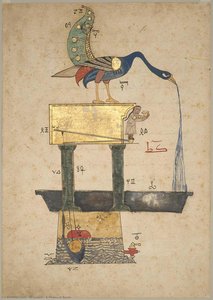
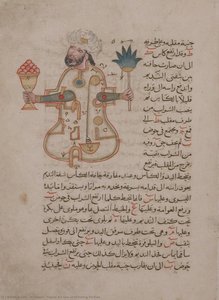
Al-Jazari’s automata are arguably the most captivating aspect of his legacy. These intricate machines, often incorporating rotating discs, moving figures, and elaborate displays, demonstrate a remarkable grasp of motion and control. The “Peacock Basin” (circa 1206), now housed in the collection of ArtsDot.com, exemplifies this artistry perfectly. This stunning automaton, crafted from brass and silver, depicts a peacock displaying its tail feathers through a series of precisely engineered mechanisms. The basin’s movement is driven by water flowing through a system of channels, creating a mesmerizing spectacle of mechanical beauty.
These automata weren't simply novelties; they represented a significant advancement in the field of automated devices. They demonstrated an understanding of feedback loops and programmed motion – concepts that would not be fully explored until centuries later. The *Book* provides detailed instructions for constructing these machines, suggesting that al-Jazari’s designs were intended to be replicated by skilled artisans.
Legacy and Historical Significance
While often referred to as the “father of robotics,” it's important to acknowledge the nuances of this title. Al-Jazari didn’t conceive of robots in the modern sense – self-aware machines capable of independent action. However, his inventions laid the groundwork for future developments by introducing fundamental principles of mechanical automation and demonstrating the potential of using mechanisms to mimic natural movements. His work profoundly influenced subsequent inventors throughout the Islamic world and beyond.
Al-Jazari’s legacy extends far beyond the realm of engineering. He represents a pivotal figure in the Golden Age of Islam, a period characterized by intellectual flourishing and groundbreaking innovation across diverse fields. His *Book of Knowledge of Ingenious Mechanical Devices* stands as a testament to human ingenuity and a window into a world where art, science, and technology were inextricably intertwined. His work continues to inspire awe and wonder, reminding us of the enduring power of creative problem-solving.