A Darkly Humorous Vision of Pop Culture and Performance
Born in the industrial heart of Detroit, Michigan, in 1989, Bailey Scieszka has emerged as a singular voice in contemporary art, weaving a tapestry of unsettling yet captivating visuals that bridge the gap between performance and painting. Her artistic identity is not merely defined by a single medium but by a profound exploration of the surreal, often channeled through her most famous creation: Old Put. This demonic clown figure serves as the vessel for Scieszka’s interdisciplinary practice, allowing her to navigate the chaotic intersections of pop culture, political anxiety, and psychological depth. Through puppet dramas, video installations, and vibrant paintings, she constructs a world where the boundaries between the playful and the grotesque are perpetually blurred.
The foundations of Scieszka’s creative sensibility were laid during her early fascination with experimental filmmaking, specifically the groundbreaking work of Jack Smith. The influence of Smith’s avant-garde approach instilled in her a lifelong commitment to challenging artistic conventions and pushing the limits of narrative structure. This trajectory was further refined during her formal education at the prestigious Cooper Union in New York City. There, she engaged with a lineage of influential mentors—including Dore Ashton, Mike Essl, Sharon Hayes, J. Hoberman, and Walid Raad—whose expertise in conceptual art and performance helped shape her ability to use the medium as a tool for conveying complex, often subversive, social ideas.
The Alchemy of Old Put and Pop Subversion
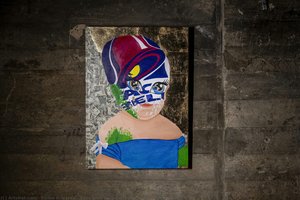
At the heart of Scieszka’s practice is a visceral engagement with the iconography of modern life. Her work frequently utilizes the aesthetic of "pop surrealism" to critique the pervasive nature of global capitalism and mass media. In pieces such as Baby with Taco Bell Face Paint (Ring My Bell), she masterfully juxtaposes the perceived innocence of childhood with the aggressive branding of corporate giants. By adorning youthful subjects with commercial logos, Scieszka invites a profound contemplation on how consumerist frenzy shapes our very identities from infancy. Her technique often mirrors this sensory overload; her paintings are characterized by a dynamic, layered approach, utilizing rich primary colors and expressive, almost unpolished brushwork that evokes the restless energy of the digital age.
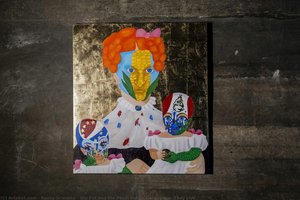
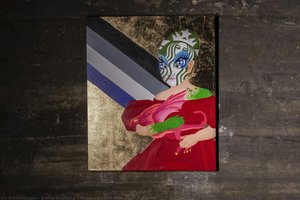
This exploration of identity extends into the realm of the transformative and the masked. In works like Old Put and the Pepsi/Indigo Generation (They Live), Scieszka delves into the fractured nature of the modern self, using vivid, aggressive pigmentation to obscure faces and create a sense of psychological tension. The artist’s ability to reference iconic cinematic moments—such as the cult classic They Live or the high-stakes drama of wrestling culture—allows her to tap into a collective cultural subconscious. Through these references, she explores the masks we wear in society, presenting a world where the visible self is constantly at war with a hidden, painted persona.
Recognition and Artistic Legacy
Scieszka’s ability to provoke and engage has earned her significant acclaim within the international art community. Her performances and visual works have been showcased at major global art fairs, including Paris Internationale and Nada in New York, marking her as a formidable presence in the contemporary landscape. The breadth of her impact is reflected in the recognition from prestigious publications such as The New Yorker, Vogue, Forbes, and The New York Times, all of which have noted her unique ability to blend dark humor with profound social commentary.
Beyond the gallery walls, Scieszka has also made strides in the literary and theatrical realms. The publication of More Heart Than Brains: The Collected Plays of Bailey Scieszka by the Detroit gallery What Pipeline serves as a testament to her dedication to storytelling through puppetry and drama. As she continues to evolve, her work remains a vital exploration of the bizarre and the beautiful, ensuring that the legacy of Old Put will continue to haunt and inspire the boundaries of contemporary performance art.