The Legacy of the Bruguier Dynasty: Masters of Swiss Automata
In the heart of Geneva, a city renowned for its precision and elegance, the names Charles-Abraham Bruguier Senior and Charles-Abraham Bruguier the Younger resonate as symbols of a golden age in mechanical artistry. Their lives were dedicated to the pursuit of capturing life itself through clockwork and gold. Born into a lineage of exceptional craftsmanship, the Bruguier family did not merely create objects; they engineered miniature wonders that blurred the line between machinery and magic. The foundation of their brilliance was laid by Jean-François Bruguier, whose workshop served as a crucible for developing the intricate skills required to master the burgeoning field of automata—mechanical devices designed to mimic the fluid movements of living creatures.
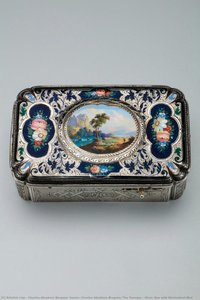
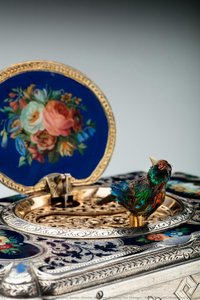
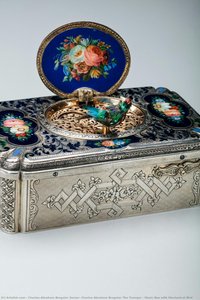
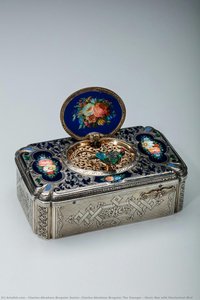
The artistry of the Bruguier duo is most profoundly expressed through their legendary singing bird boxes. These were not simple trinkets, but sophisticated theatrical performances contained within exquisite wooden or gilded enclosures. Within these small vessels, a miniature mechanical bird would emerge, its tiny throat vibrating to produce a trill that mimicked the songs of nature with startling realism. To witness such a device in the candlelight of the 19th century was to experience a moment of pure enchantment, as the rhythmic fluttering of wings and the delicate chirping provided a sensory escape into a pastoral paradise.
Technique, Ornamentation, and Aesthetic Vision
The technical mastery required for such feats of engineering was matched only by their eye for aesthetic splendor. The Bruguier workshop excelled in integrating complex internal mechanics with breathtaking external ornamentation. Their work often featured:
- Intricate Gilded Details: The use of gold accents to catch the light and emphasize the luxury of the pieces.
- Narrative Painting: Many boxes were adorned with meticulously painted scenes, ranging from classical mythology to serene landscapes, turning each object into a miniature canvas.
- Precision Engineering: A seamless marriage of delicate gears, bellows, and cams that allowed for lifelike movement and sound.
For Charles-Abraham Bruguier Senior, the drive was one of constant innovation, pushing the boundaries of what mechanical movement could achieve. This visionary spirit was inherited by his son, ensuring that the family's reputation for excellence remained untarnished across generations. Their work reflected the broader cultural fascination of the era with the wonders of science and the beauty of the natural world, embodying a period where luxury and technological advancement were inextricably linked.
Historical Significance and Enduring Influence
The historical importance of the Bruguier legacy extends far beyond the borders of Switzerland. Their creations became highly sought-after treasures among the European aristocracy, representing the pinnacle of prestige and taste during the Victorian era. The ability to command such complex mechanical life within a handheld object was a profound statement of wealth and intellectual curiosity. Today, the works of the Bruguier masters are preserved in prestigious museums worldwide, serving as vital artifacts of the history of horology and automata.
As we look back upon their contributions, we see more than just mechanical skill; we see an enduring passion for beauty and a relentless pursuit of perfection. The Bruguier name remains synonymous with the delicate dance between art and science, leaving behind a legacy that continues to inspire awe in all who encounter the lifelike magic of their singing birds.