The Luminous Legacy of Charles William Carey
Charles William Carey (1862-1943) remains a quietly celebrated figure in British Impressionist painting, his canvases offering glimpses into the serene beauty of rural England and capturing fleeting moments of atmospheric light. Despite limited biographical details—a fact that lends an air of mystery to his artistic legacy—Carey’s paintings continue to resonate with collectors and art historians alike, demonstrating a remarkable sensitivity to color and form. His work serves as a window into a bygone era, where the quietude of the English countryside was immortalized through the lens of a masterfully observant eye.
Information about Carey's formative years is scarce, primarily relying on anecdotal evidence regarding his upbringing in Dublin during the Victorian era. However, it’s widely accepted that he absorbed considerable artistic influence from the burgeoning Impressionist movement, spearheaded by luminaries like Claude Monet and Pierre-Auguste Renoir. This exposure fostered a distinctive approach characterized by loose brushstrokes and an emphasis on capturing the ephemeral qualities of natural light—a hallmark of Carey's oeuvre. His familial connections further suggest an intellectual depth; he was the son of Mathew Carey, a prominent publisher known for advocating liberal ideals, and his cousin, Henry Charles Carey, established himself as a respected economist, reflecting the vibrant intellectual currents that likely shaped Carey’s worldview.
Mastery of Light and Atmosphere
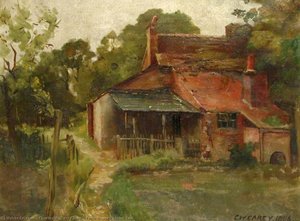
Carey's artistic style is instantly recognizable by its masterful use of chiaroscuro—the dramatic interplay between light and shadow—which lends depth and dimensionality to his landscapes and seascapes. He skillfully employed oil paints on canvas, achieving luminous effects that evoke the grandeur of sunsets or the tranquil stillness of misty mornings. His compositions prioritize capturing the essence of a scene rather than striving for photographic realism; instead, he sought to convey mood and atmosphere through subtle color palettes and expressive brushwork.
His repertoire includes several notable works that showcase his ability to blend architectural precision with natural softness:
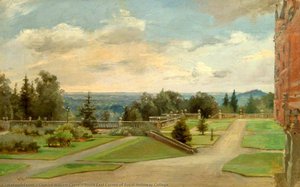
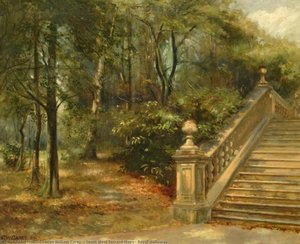
- South East Corner of Royal Holloway College (1890): An Impressionistic landscape where serene gardens and architecture meet in a harmonious display of light.
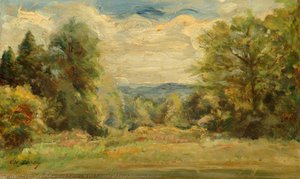
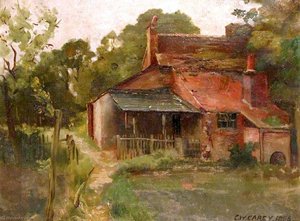
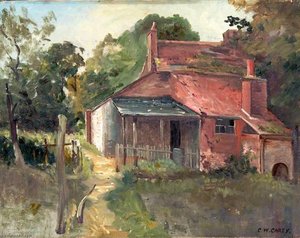
- In the Grounds of Royal Holloway College (1880): A stunning piece featuring loose brushstrokes and a captivating woodland scene that highlights his skill with atmospheric perspective.
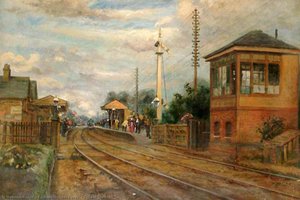
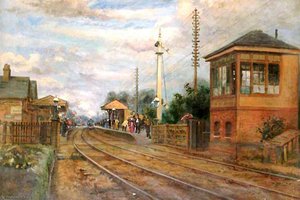
- Egham Station, Surrey: A nostalgic Victorian scene of rural railway life, rendered with realistic detail and a sense of historical intimacy.
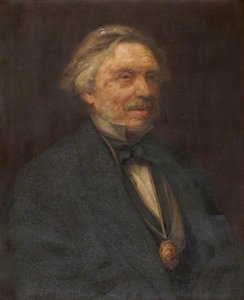
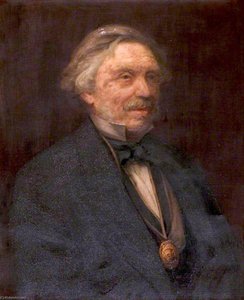
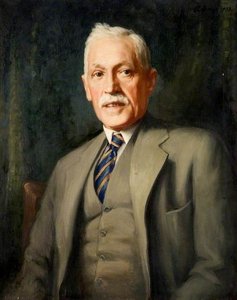
- John Jones of the Strand: A portrait-focused work that demonstrates his versatility beyond the landscape genre.
Historical Significance and Artistic Impression
The significance of Charles William Carey lies in his ability to bridge the gap between traditional Victorian realism and the emotive freedom of Impressionism. While his subjects often remained rooted in the recognizable landscapes of England and the nostalgic settings of the late 19th century, his technique pushed toward a more modern, sensory experience. By focusing on the ephemeral—the way light shifts across a garden or how mist clings to a station platform—he invited viewers to feel the passage of time within his paintings.
Though much of his personal history remains shrouded in the mists of the past, his contribution to the British Impressionist tradition is undeniable. His works stand as enduring testaments to a period of profound transition in art history, reminding us that the most profound beauty often resides in the quietest, most tranquil corners of the natural world.