A Brushstroke Across Time: The Life and Legacy of Donggang Pi Jeong-jong
Donggang Pi Jeong-jong, a name resonating softly through the annals of Korean literary history, represents more than just a scribe; he embodies a fleeting moment captured in ink – a testament to cultural exchange and artistic sensitivity during the Joseon Dynasty. Born in Korea (exact date unknown), his life remains largely shrouded in the mists of time, yet his enduring contribution stems from a single documented event: his participation as a member of the royal envoy dispatched to Japan in 1811, during the reign of King Sunjo. This journey wasn’t merely a diplomatic undertaking; it was an opportunity for cultural immersion and artistic inspiration, one that profoundly shaped Pi Jeong-jong's creative spirit. While details surrounding his early life and formal training are scarce, we can infer a degree of scholarly refinement given his role as a royal scribe – a position demanding precision, elegance, and a deep understanding of classical literature.
The Journey to Japan: A Catalyst for Poetic Expression
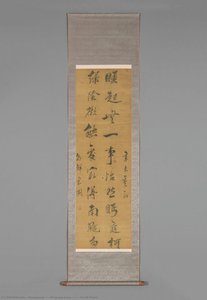
The 1811 mission to Japan proved pivotal in Pi Jeong-jong’s artistic development. As part of the envoy, he witnessed firsthand the customs, landscapes, and aesthetics of a neighboring nation. This exposure ignited within him a desire to document his experiences not through official reports, but through the evocative power of poetry. He is best known for composing a five-character poem – a traditional form in Korean verse – chronicling the voyage and its accompanying impressions. The poem itself isn’t simply a travelogue; it's a nuanced reflection on cultural differences, the beauty of the natural world, and perhaps even a subtle commentary on the political climate of the time. It offers a rare glimpse into the perspective of a Joseon Dynasty official navigating foreign lands, grappling with both fascination and a sense of otherness. The poem’s existence speaks volumes about the importance placed on literary expression within the royal court, even during diplomatic endeavors.
Style and Themes: Echoes of Tradition and Personal Observation
Pi Jeong-jong's poetic style is deeply rooted in classical Korean traditions. His use of five-character verses adheres to established conventions, emphasizing conciseness, balance, and a refined vocabulary. However, within this framework, he demonstrates a keen eye for detail and a sensitivity to personal observation. The poem reveals a fascination with the Japanese landscape – its mountains, rivers, and unique flora and fauna. He doesn’t merely describe these elements; he imbues them with emotional resonance, using imagery to convey his feelings of awe, wonder, and perhaps even a touch of melancholy. The themes explored in his work are subtle yet profound: the transience of life, the beauty of nature, and the complexities of cultural exchange. His poem is not overtly political or philosophical; rather, it’s a quiet meditation on the human experience, filtered through the lens of a specific historical moment.
Historical Significance: A Voice from the Sunjo Era
While Pi Jeong-jong may not be as widely celebrated as some of Korea's more prominent literary figures, his contribution remains significant for several reasons. His poem provides invaluable insight into the Joseon Dynasty’s relationship with Japan during the 19th century – a period marked by both diplomatic engagement and underlying tensions. It offers a rare firsthand account of cultural exchange from the perspective of a royal official, shedding light on the perceptions and attitudes prevalent at the time. Furthermore, his work serves as a testament to the enduring power of poetry as a means of documenting history and preserving cultural memory. The fact that this single poem has survived for over two centuries speaks volumes about its artistic merit and historical importance. It’s a reminder that even seemingly minor figures can leave an indelible mark on the tapestry of Korean literary heritage, offering future generations a glimpse into the past and a deeper understanding of their cultural roots.