The Visionary Lines of Émile Antoine Verpilleux
In the grand tapestry of early twentieth-century art, few figures possess the unique dual identity of Émile Antoine Verpilleux. An Anglo-Belgian master whose life bridged the cultural nuances of London and Antwerp, Verpilleux emerged as a pioneer who redefined the boundaries of printmaking. Born in Notting Hill in 1888 to a Belgian father and a Scottish mother, his very existence was an intersection of European traditions. This international upbringing provided him with a versatile artistic lens, allowing him to capture the atmospheric essence of both British urbanity and Continental landscapes with equal profoundness. His early education at the Regent Street Polytechnic and later at the prestigious Académie des Beaux-Arts in Antwerp instilled in him a rigorous technical foundation, yet his spirit remained ever-attuned to the expressive possibilities of light and color.
Verpilleux’s ascent in the art world was marked by a remarkable series of milestones that challenged the conventions of his era. He holds the distinction of being the first artist to have hung a colored print work at the Royal Academy, a feat that signaled a paradigm shift in how printmaking was perceived within the fine arts establishment. While his early career saw him finding success as an illustrator for monthly magazines—a path ignited by the commission for E. Temple Thurston’s “The Charm of Beautiful Nonsense”—it was his mastery of the colour woodcut that would secure his historical legacy. Through a fruitful collaboration with the renowned publishing house Colnaghi & Co., Verpilleux brought a new vibrancy to the medium, utilizing multi-layered techniques to create works that possessed the depth and luminosity of oil paintings.
Atmospheric Landscapes and the Spirit of an Era
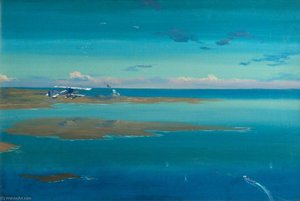
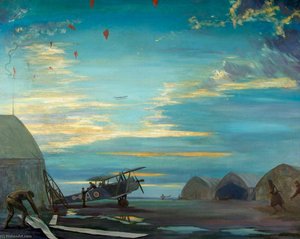
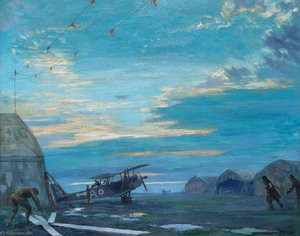
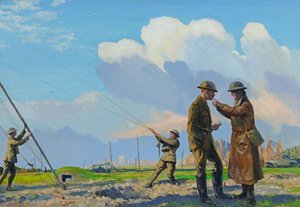
The true soul of Verpilleux’s oeuvre lies in his ability to translate the ephemeral qualities of atmosphere into permanent form. Whether through the delicate textures of a woodcut or the sweeping strokes of an oil on canvas, he possessed an uncanny knack for capturing the "mood" of a moment. His landscapes often transcend mere topography; they are emotional evocations of time and light. In works such as “Morning,” created in the wake of the Great War, one finds a serene yet poignant interplay between man and machine, where the warmth of dawn light meets the burgeoning era of aviation. This ability to blend realism with a touch of whimsy allowed him to document the changing face of the modern world—from the bustling, soot-stained majesty of St Paul’s from Cheapside to the quiet, rhythmic beauty of the natural world.
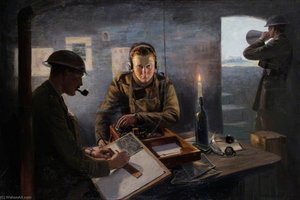
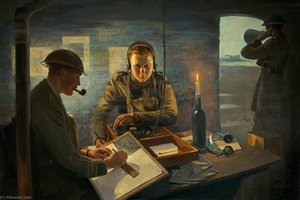
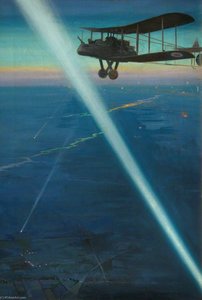
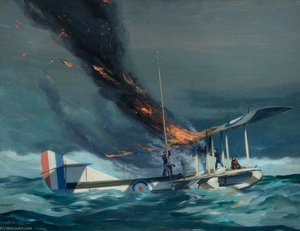
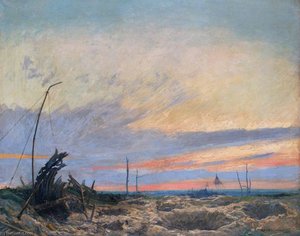
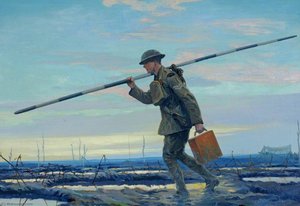
His technical development was deeply influenced by his experiences during the First World War. Serving with distinction in the Royal Air Force, attaining the rank of Captain and receiving a mention in despatches, Verpilleux witnessed firsthand the dramatic shifts in technology and the somber realities of conflict. This period of service undoubtedly deepened the gravity and structural integrity of his compositions. His later works often reflect a more complex, sometimes even dramatic, narrative tension, as seen in the muted tones and powerful compositions of his wartime-themed paintings. The precision required for his woodcuts mirrored the discipline of his military life, yet the subject matter remained rooted in an enduring fascination with the interplay of shadow and brilliance.
A Legacy of Color and Craft
Beyond the technical mastery of his prints, Verpilleux’s significance extends to his role as a cultural bridge-builder. His work helped popularize the aesthetic of the colour woodcut among the British public, making fine art more accessible through the medium of high-quality print publishing. His contributions were not merely aesthetic but also civic; his membership in the Order of the British Empire serves as a testament to a life lived with both artistic passion and profound responsibility. As we look back upon his career, several key elements define his enduring impact:
- Innovation in Printmaking: His groundbreaking use of multi-colored woodcut techniques elevated the medium from simple illustration to a respected form of fine art.
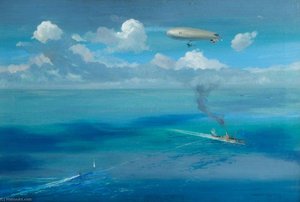
- Urban and Aerial Perspectives: He captured the transition of the modern landscape, documenting iconic London landmarks and the rise of aviation with a unique, atmospheric clarity.
- Cultural Synthesis: His ability to blend Belgian academic precision with British landscape sensibilities created a distinctive style that resonated across borders.
- Historical Documentation: Through his evocative depictions of both peace and the shadows of war, he provided a visual chronicle of the early twentieth century's most transformative decades.
Today, the works of Émile Antoine Verpilleux continue to captivate collectors and historians alike. His ability to find beauty in the mundane—the light hitting a railway station or the clouds drifting over a quiet field—reminds us that art is not merely about what we see, but how we feel the world around us. He remains a singular figure, a master of the line and the block, whose colorful legacy continues to glow with the warmth of a permanent morning.