A Tapestry of Resilience: The Life and Vision of Enoé Margarita Uranga Muñoz
In the vibrant intersection of political activism and creative expression lies the profound legacy of Enoé Margarita Uranga Muñoz. Born in Mexico City on May 1, 1963, Uranga’s life has been a continuous dialogue between the struggle for social justice and the evocative power of visual storytelling. Her journey is not merely one of personal achievement but a testament to the courage required to stand at the forefront of human rights advocacy. Growing up in the heart of Mexico, her early intellectual pursuits led her to the Free University of Berlin and the Universidad Autónoma Metropolitana, academic environments that sharpened her critical eye and provided the philosophical foundation for her lifelong commitment to challenging societal inequities.
The essence of Uranga’s work is inextricably linked to her role as a pioneer in the Mexican political landscape. As the first openly homosexual female member of a state legislature in Mexico's history, she transformed the halls of power into a stage for visibility and reform. Her tenure in the 111th Congress and her leadership as president of the Human Rights Commission of the Federal District Legislative Assembly were marked by an unwavering dedication to protecting the marginalized. This political battleground served as a profound influence on her artistic psyche, infusing her creative output with themes of identity, vulnerability, and the raw strength found in resistance.
The Language of Color and Texture
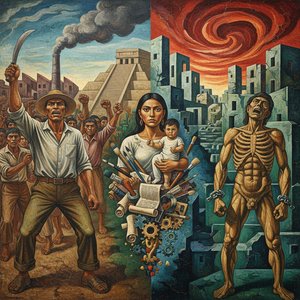
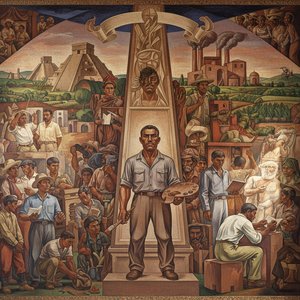
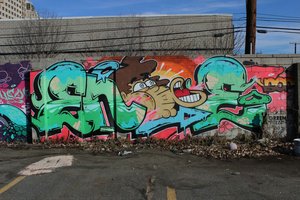
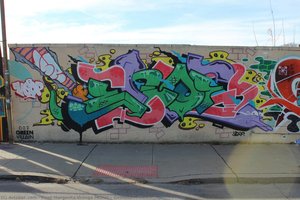
To encounter the art of Enoé Margarita Uranga Muñoz is to witness a visual manifestation of struggle and triumph. Her aesthetic language avoids the passive; instead, it embraces a boldness that mirrors her political convictions. The artist utilizes striking colors and heavily textured surfaces to create works that demand attention and provoke introspection. These tactile elements are not merely decorative but serve as metaphors for the complexities of the human condition—the layers of history, the friction of conflict, and the enduring beauty of resilience.
In her compositions, one can observe a deliberate exploration of the following motifs:
- Identity and Selfhood: A deep dive into the nuances of personal and political belonging.
- The Texture of Resistance: Using physical depth on the canvas to represent the grit required to fight for equality.
- Vulnerability as Strength: Capturing the delicate balance between the fragility of the individual and the power of a movement.
Her artistic development has been a parallel evolution to her legislative career. As she navigated the complexities of human rights law, her brushstrokes became more assertive, reflecting an unwavering determination to confront prejudice. The art becomes a sanctuary where the political becomes personal, allowing for a nuanced exploration of the very communities she fought to protect in the legislative assembly.
A Lasting Legacy of Advocacy and Art
The historical significance of Enoé Margarita Uranga Muñoz extends far beyond the boundaries of a single medium. She has successfully bridged the gap between the activist's podium and the artist's canvas, proving that creativity can be a potent tool for legislative and social change. Her life stands as a landmark in Mexican history, representing a pivotal moment when the voices of the LGBTQ+ community began to reshape the nation's legal and cultural fabric.
Today, her legacy continues to inspire a new generation of creators and advocates who see no distinction between the fight for justice and the pursuit of truth through art. Through her work, Uranga has ensured that the struggles of the past are not forgotten but are instead transformed into a vibrant, textured, and colorful testament to the enduring human spirit. Her contribution remains a vital part of the contemporary Mexican narrative, reminding us that art is never silent when there is a world to be changed.