The Sculptural Journey of Ewerdt Hilgemann
Born in the German city of Witten in 1938, Ewerdt Hilgemann has cultivated a career that bridges the gap between industrial strength and conceptual elegance. His artistic trajectory, which eventually led him from his German roots to the vibrant creative landscape of the Netherlands, reflects a deep-seated commitment to the transformative possibilities of sculpture. For over two decades, from 1977 to 1998, Hilgemann served as a pivotal educator at the prestigious Willem de Kooning Academy in Rotterdam. This period of academic influence allowed him to refine his understanding of how art interacts with its environment, providing an intellectual foundation that would become the heartbeat of his later, more monumental works.
The Poetics of Minimalism and Materiality
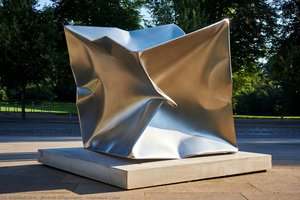
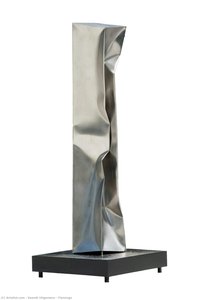
At the core of Hilgemann’s practice lies an obsession with the purity of geometry and the rhythmic power of serial repetition. Working primarily with steel and resin, he crafts pieces that demand attention through their stark, minimalist presence. His sculptures utilize geometric shapes to create a visual language that is both mathematically precise and emotionally resonant. There is a profound tension in his use of heavy, industrial steel, which is often manipulated to achieve a sense of conceptual fluidity. Through the interplay of light and shadow on these polished or textured surfaces, Hilgemann invites the viewer to contemplate the boundary between the manufactured and the organic, finding beauty in the most disciplined of forms.
A Legacy Written in Public Space
Hilgemann’s art is rarely confined to the sterile walls of a gallery; instead, it breathes within the very fabric of the world. He has achieved international significance through his mastery of site-specific installations, creating works that are inextricably linked to their surroundings. Whether placed in bustling European plazas or significant public spaces across the United States, his sculptures act as monumental anchors that engage with the surrounding architecture and natural light. By placing large-scale, geometric forms in the path of the everyday observer, he transforms public landscapes into stages for profound aesthetic reflection. His legacy is found not just in museums, but in the way his steel and resin forms have permanently altered the visual dialogue of the cities that host them.