The Graphic Pulse of a Turbulent Era
Francisco Rivero Gil stands as a profound witness to the shifting tides of twentieth-century Spanish history, a master whose brush and pen captured the very heartbeat of a nation in flux. Born in 1899 in the coastal city of Santander, his life was inextricably woven into the social and political upheavals that defined his generation. As an artist who navigated the complexities of the Spanish Civil War and its aftermath, Rivero Gil did not merely observe history; he translated its rawest emotions—the struggle, the resilience, and the pervasive shadow of propaganda—into a compelling visual language. His journey from the classrooms of the Escuela Superior de Diseño Cristóbal Goya in Madrid to the vibrant, often chaotic world of press illustration allowed him to develop a style that was as much about social commentary as it was about aesthetic mastery.
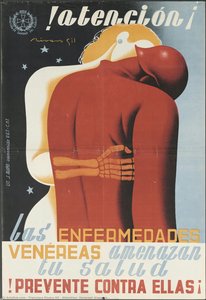
His early professional years were marked by a remarkable versatility, as he moved seamlessly between the precise demands of typography and the expressive freedom of caricature. Working as an illustrator for various newspapers and magazines, he mastered the art of the fleeting moment, learning how to distill complex political narratives into singular, striking images. This period of his life was characterized by a deep engagement with the public sphere; through his posters and theatrical banners, he utilized bold color palettes and dramatic compositions to communicate messages that resonated far beyond the printed page. His work functioned as a bridge between high art and mass communication, making him a vital voice in the dissemination of social awareness during times of intense national identity crisis.
A Synthesis of Realism and Expression
The technical brilliance of Rivero Gil lies in his ability to balance meticulous detail with a dynamic, almost kinetic energy. His artistic evolution saw him move toward a sophisticated blend of realism and expressive abstraction, a technique that allowed him to depict the physical hardships of the working class while simultaneously evoking the psychological anxieties of the era. In his graphic works, one can observe a profound command over line and form, where every stroke serves to heighten the emotional stakes of the subject matter. Whether he was designing a political cartel or a delicate illustration, his work possessed an unmistakable gravity, demanding that the viewer confront the realities of human suffering and social injustice.
His influence extended far beyond the borders of Spain, as evidenced by his presence in some of the world's most prestigious collections. The inclusion of his works in institutions such as the Museum of Modern Art (MoMA) in New York and the Museo Nacional Centro de Arte Reina Sofía in Madrid underscores his significance within the global canon of graphic art. These accolades reflect a legacy that transcends mere illustration, positioning him as a pivotal figure whose work bridged the gap between political activism and fine art. His ability to infuse the medium of print with such deep, humanistic resonance ensures that his contributions to the history of Spanish modernism remain both relevant and deeply moving.
As we reflect on the life of Francisco Rivero Gil, we see more than just a talented designer or caricaturist; we encounter an artist who used the tools of his trade to document the soul of a people. His legacy is found in:
- The mastery of visual storytelling through the integration of typography and illustration.
- A fearless commitment to social critique, using the poster medium to engage with political realities.
- The enduring impact of his graphic style, which continues to inspire those exploring the intersection of art and activism.
- His historical role as a chronicler of the Spanish experience during one of its most transformative centuries.