The Luminous Legacy of Frederick Soulacroix
In the heart of the nineteenth century, as the streets of Paris began to pulse with the energy of a modernizing world, there emerged a painter capable of capturing not just the architecture of the city, but its very soul. Frederick Soulacroix, born in Montpellier in 1825, possessed a rare sensitivity to the ephemeral qualities of light and atmosphere. While his early training at the École des Beaux-Arts provided him with a rigorous foundation in academic precision, his artistic journey was defined by a profound departure from the rigid structures of tradition. He moved beyond the mere reproduction of form to embrace the revolutionary spirit of Impressionism, seeking instead to document the fleeting, shimmering moments that define urban existence.
Soulacroix’s evolution as an artist was deeply intertwined with the shifting cultural tides of France. Influenced by the pioneering methods of Claude Monet and Camille Pissarro, he learned to prioritize the play of color and the movement of light over meticulous, static detail. This stylistic metamorphosis allowed him to transform a simple street scene into a living, breathing entity. His brushwork, often loose and spontaneous, mirrored the rapid transformation of Paris itself—a city caught in a state of constant flux. Through his eyes, we see the dappled sunlight filtering through iron structures and the soft, hazy glow that settles over the boulevards at dusk, creating a sense of presence that invites the viewer to step directly into the canvas.
A Mastery of Light and Subject
The versatility of Soulacroix’s oeuvre is one of his most enduring triumphs. His repertoire was not limited to the grand vistas of the cityscape; rather, he moved with equal grace between sweeping landscapes, intimate portraits, and delicate genre scenes. He possessed a singular ability to manipulate tonal gradation, particularly in his depictions of Parisian interiors. In these quiet spaces, he utilized soft, diffused light to create an atmosphere of profound tranquility, turning domestic settings into studies of peace and introspection.
His notable works serve as windows into different facets of nineteenth-century life:
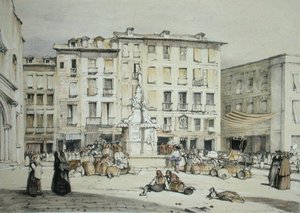
- La Puerta Del Sol: A masterful watercolor that exemplifies his ability to render urban life through muted tones and fluid strokes, capturing the atmospheric weight of a city in motion.
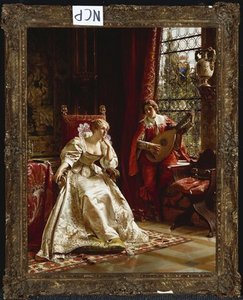
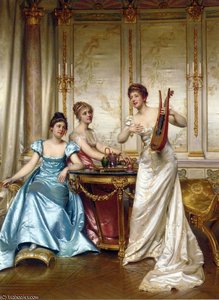
- The Satin Rose: A testament to his command of realism and texture, where he employs a rich color palette to celebrate the elegance and opulence of his subjects.
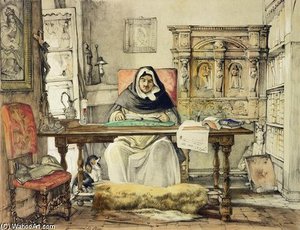
- Lady Reading: An intimate glimpse into the quietude of private moments, showcasing his skill in capturing the subtle interplay of shadow and light upon a single figure.
Beyond the technical brilliance of his oil and watercolor works, Soulacroix’s art carries an emotional resonance. There is a certain nostalgia embedded in his depictions of the Belle Époque—a sense of capturing a world that was, even as he painted it, beginning to slip into history. His ability to blend the academic discipline of his youth with the emotive freedom of the Impressionist movement allowed him to create works that are both structurally sound and poetically evocative.
Historical Significance and Artistic Heritage
Though history occasionally places him in the shadow of giants like Édouard Cortès, the significance of Frederick Soulacroix remains undiminished for those who seek the true essence of French Impressionism. He was an artist of transition, a bridge between the formal traditions of the past and the experimental brilliance of the future. His work stands as a vital record of a transformative era, preserving the light, the movement, and the very breath of nineteenth-century Paris.
His legacy also extends through his lineage, as he was the father of the painter Frédéric Soulacroix, ensuring that the family's dedication to genre painting continued into the next generation. Today, when we look upon a Soulacroix original, we are not merely observing a landscape or a portrait; we are experiencing a carefully preserved fragment of time, rendered with a devotion to beauty and an unparalleled mastery of the luminous atmosphere.