The Verdant Legacy of Gaspar Pieter Verbruggen the Younger
In the heart of Antwerp, a city breathing with the artistic fervor of the Flemish Baroque, Gaspar Pieter Verbruggen the Younger was born into a world defined by color and craftsmanship. As the son of the esteemed Gaspar Peeter Verbruggen the Elder, his very existence was intertwined with the lineage of botanical mastery. From his earliest years, the boy was immersed in the delicate nuances of light and petal, receiving a rigorous training that would eventually allow him to achieve mastership at the prestigious Guild of Saint Luke by the tender age of thirteen. This precocious milestone not only solidified his standing within the Antwerp artistic community but also signaled the arrival of a talent capable of breathing life into the most ephemeral subjects: the fleeting beauty of a blooming rose or the succulent weight of ripening fruit.
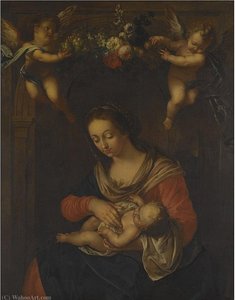
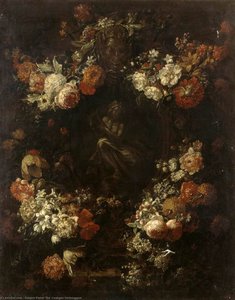
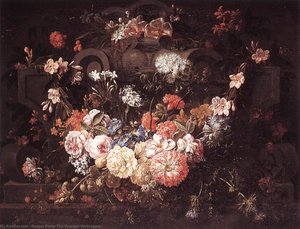
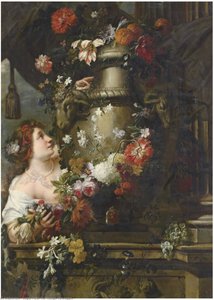
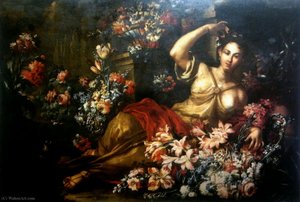
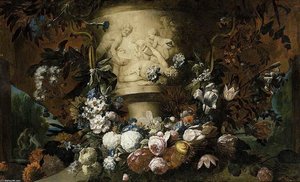
Verbru erggen’s artistry was characterized by an exquisite ability to blend the botanical with the divine. He became particularly renowned for his decorative garland paintings, a genre that demanded both technical precision and a poetic sensibility. In these works, he often collaborated with figure painters, creating compositions where lush, meticulously rendered floral wreaths would frame sacred or mythological subjects. One of his most celebrated contributions to the Guild was a magnificent flower garland surrounding a statue of Apollo, a collaborative masterpiece created alongside Balthasar Hyacinth Verbruggen and Jacob Melchior van Herck. This work serves as a testament to his generosity and his deep-seated commitment to the guild that had nurtured his growth, as he gifted the piece in gratitude for the acceptance of his pupils.
A Life of Opulence and Solitude
The trajectory of Verbruggen’s life was as dramatic as the chiaroscuro found in his paintings. During the height of his success, he enjoyed a lifestyle of considerable comfort, residing in a grand house on Meirstraße, one of Antwerp's most vibrant commercial arteries. His marriage to Dymphna van der Voort in 1700 marked a period of personal stability; however, the sudden and tragic death of his wife in 1702 plunged him into a profound period of grief and isolation. This personal upheaval was compounded by mounting financial pressures, driven perhaps by the very extravagance that once defined his social standing. The necessity of liquidating his extensive artistic holdings became a somber reality, forcing him to seek a new beginning far from the familiar streets of Antwerp.
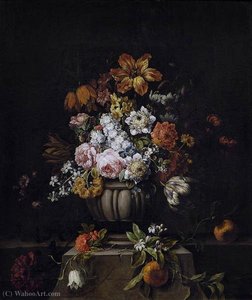
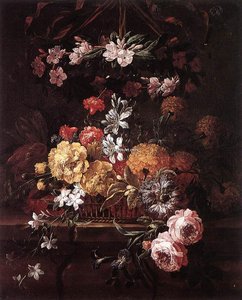
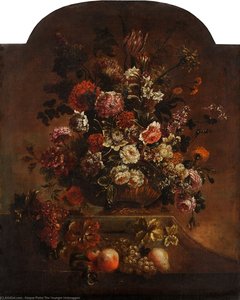
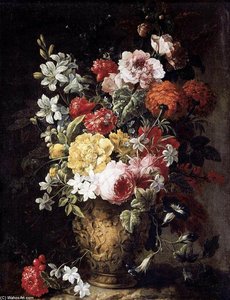
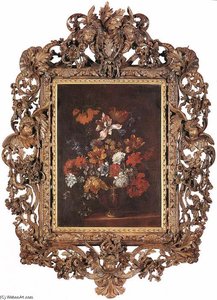
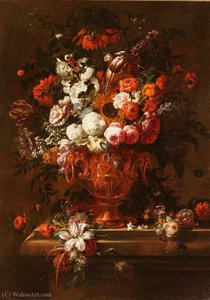
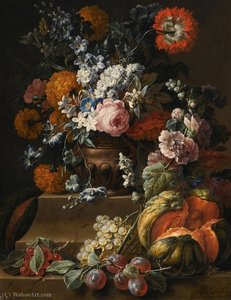
In 1705, seeking respite from the shadows of debt and loss, Verbruggen journeyed to Amsterdam. This transition marked a shift in his geographical focus but not in his artistic essence. His work continued to resonate with the themes of the Dutch Golden Age, characterized by an opulent approach to still life that appealed to the sensibilities of the era's elite. Whether painting a solitary Flower Piece or complex Cartouches with Flowers, he maintained a standard of meticulous detail and rich texture that made his canvases feel almost tactile. His ability to capture the dew on a leaf or the velvety surface of a petal ensured that his name remained synonymous with the pinnacle of Flemish floral artistry.
Artistic Significance and Enduring Influence
The historical significance of Gaspar Pieter Verbruggen the Younger lies in his role as a bridge between the traditions of his father’s generation and the evolving tastes of the early 18th century. His work represents a peak in the development of the garland painting, a genre that required a unique synergy between different artistic disciplines. Through his mastery, he elevated the still life from mere decoration to a profound meditation on nature's abundance and the passage of time.
His enduring legacy can be summarized through several key artistic contributions:
- Mastery of Texture: His ability to utilize layered glazing to create depth and realism in botanical subjects.
- Collaborative Spirit: His role in advancing the genre of figure-and-garland paintings through partnerships with contemporary masters.
- Botanical Precision: A scientific yet emotive approach to depicting a wide variety of flora and fauna, contributing to the richness of the Flemish Baroque repertoire.
Today, when we gaze upon his vibrant arrangements, we do not merely see flowers; we see the resilience of an artist who navigated the heights of fame and the depths of personal tragedy, leaving behind a blooming testament to the beauty of the natural world.