A Legacy Bent in Innovation
The story of Gebrüder Thonet, or the Thonet Brothers, is far more than a mere chronicle of industrial manufacturing; it is a sweeping saga of ingenuity and enduring design that serves as a cornerstone of nineteenth-century European history. The journey began in Boppard, Germany, in 1819, when Michael Thonet embarked on a path driven not by grand ambition, but by the quiet necessity of securing his family’s livelihood. In those early years, the foundations of what would become a global empire were laid through relentless experimentation and a profound understanding of material potential. By recognizing the inherent limitations of traditional woodworking, Michael sought to transcend the heavy, cumbersome aesthetics of his era, setting the stage for a revolution in how we inhabit our spaces.
At the heart of this transformation was a singular, breathtaking breakthrough: the perfection of steam bending. This revolutionary technique involved heating wood slats to extreme temperatures and applying them to pressure molds, allowing for unprecedented curves and structural integrity that were previously thought impossible. Unlike the older methods of bending raw billets that required extensive secondary shaping, Thonet’s precise process allowed timber to be machined, steam-bent, and utilized almost immediately. This mastery over wood granted his creations a graceful, lightweight, and durable quality—a complete departure from the rigid, carved designs of the past. It was an alchemy of heat and pressure that turned simple wood into fluid, sculptural art.
From Boppard to the Imperial Courts of Vienna
The trajectory of the Thonet legacy shifted dramatically in 1841, following a chance encounter with the influential diplomat Prince Clemens von Metternich. Recognizing the profound talent within Michael’s workshop, the Prince encouraged his relocation to Vienna, a move that would expose Thonet’s creations to the most sophisticated aristocratic tastes in Europe. The patronage of such high-profile figures provided more than just financial stability; it offered a stage upon which the elegance and sophistication of the Thonet name could be showcased to the Imperial Family itself. This period of transition saw the workshop evolve from a local enterprise into a symbol of refined modernism.
As the company expanded, so too did its influence across the continent. By 1853, the enterprise was formally transferred to Michael’s sons under the name Gebrüder Thonet, marking the beginning of an era defined by industrial-scale production and modular efficiency. The brothers implemented a remarkably sophisticated system of division of labor, establishing factories across Central Europe, including Koryčany. This innovative approach minimized waste and maximized output, allowing their signature pieces to move from the workshops of master craftsmen into the bustling cafes and homes of the masses. It was this unique intersection of high art and industrial capability that allowed Thonet to anticipate cultural trends before they even emerged.
The Iconography of the No. 14 Chair
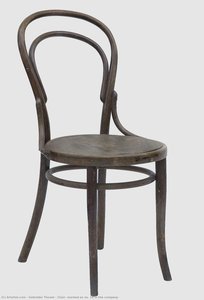
Perhaps no single achievement embodies the spirit of the Thonet legacy more perfectly than the No. 14 chair. Often referred to as the "Bistro Chair," this piece became an instant global sensation, representing the pinnacle of functional beauty. It was a masterpiece of the modular era—a design so efficient and aesthetically pleasing that it could be disassembled, shipped in large quantities, and reassembled with ease. The No. 14 chair did not merely occupy space; it defined the aesthetic of the modern cafe culture, offering a sense of lightness and democratic elegance that resonated across borders.
The historical significance of Gebrüder Thonet lies in their ability to bridge the gap between the artisanal past and the industrial future. Their work remains a testament to several enduring principles:
- Material Innovation: The transformative use of steam to manipulate wood into organic, flowing shapes.
- Democratic Design: The creation of high-quality, beautiful objects that were accessible through efficient mass production.
- Structural Integrity: A commitment to durability and lightness that allowed furniture to become more mobile and versatile.
- Lasting Influence: A design language so profound that the descendants of the original company—Thonet GmbH, Thonet Vienna, and TON—continue to influence contemporary interiors today.
Through their mastery of the bend, the Thonet brothers did not just shape wood; they shaped the very silhouette of modern living, leaving behind a legacy that remains as supple and resilient as the bentwood itself.