A Convergence of Faith and Form
George William Peters (1907–1988) remains a singular figure in the annals of twentieth-century intellectual and creative history, standing at the profound intersection of theological scholarship and visual expression. Born in Orlov, Russia, his early life was shaped by an environment that valued both rigorous intellectual inquiry and deep spiritual contemplation. This dual heritage would become the cornerstone of his life's work, as he sought to bridge the gap between the abstract complexities of biblical theology and the tangible, emotive power of fine art. His journey from the theological halls of the Moscow Theological Seminary to the academic leadership roles in America reflects a lifelong commitment to exploring the divine through both the written word and the painted brush.
As a scholar, Peters was a formidable presence in evangelical education. His tenure as the president of the Pacific Bible Institute from 1947 to 1952 allowed him to shape the minds of future theologians, while his subsequent role as academic dean and professor at Fresno Theological Seminary solidified his reputation as a respected voice in missions and theology. Yet, for Peters, the pursuit of truth was never confined to the pulpit or the lecture hall. He believed that profound spiritual truths required an eloquent visual language to truly resonate with the human soul, leading him to develop a unique artistic style that translated complex biblical narratives into captivating watercolor compositions.
The Symbolism of Light and Shadow
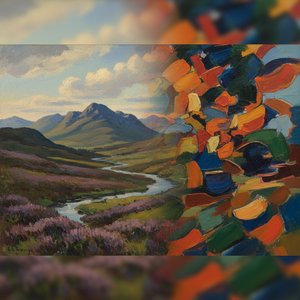
The artistry of George William Peters is characterized by its ability to imbue landscapes and biblical scenes with deep symbolic weight. Working primarily in watercolor, he utilized the medium's inherent translucency to capture the ethereal qualities of divine light and the heavy, textured shadows of spiritual struggle. His technique was never merely decorative; every brushstroke served a narrative purpose, often employing geometric structures to guide the viewer’s eye through a theological journey. He frequently utilized triangular compositions—a classical technique—to instill a sense of stability, permanence, and divine authority within his depictions of sacred events.
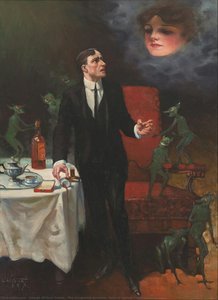
His most celebrated masterpiece, “The Dangerous Servants,” serves as a breathtaking testament to this mastery. In this monumental watercolor, Peters orchestrates a dramatic confrontation between Christ and Satan, capturing the visceral essence of spiritual warfare. Through a vibrant yet carefully controlled color palette, he depicts the chaotic energy of demonic influence clashing against the serene, unshakeable presence of the divine. The painting is not merely a depiction of a biblical concept but an immersive experience that invites the viewer to witness the cosmic tension between good and evil through meticulous detail and evocative atmosphere.
A Legacy of Spiritual Vision
The historical significance of George William Peters lies in his refusal to separate the intellect from the imagination. While many scholars of his era focused solely on the analytical aspects of scripture, Peters recognized that art could act as a window into the transcendent. His work serves as a bridge between the academic study of missions and theology and the visceral experience of religious devotion. By translating the doctrines he taught into the visual language of watercolor, he created a legacy that continues to inspire those who seek beauty in the service of truth.
Reflecting on his life's work, several key elements emerge as defining characteristics of his contribution to art and theology:
- Theological Integration: The seamless blending of rigorous biblical interpretation with visual storytelling.
- Mastery of Medium: An expert use of watercolor to represent the interplay of light, shadow, and spiritual atmosphere.
- Symbolic Composition: The use of deliberate geometric forms, such as triangles, to convey theological concepts like stability and divine order.
- Narrative Depth: A focus on dramatic biblical moments that emphasize the emotional and cosmic stakes of faith.