Gerrit de Wet: A Rembrandtian Echo in Dutch Landscape Painting
Gerrit de Wet (c. 1616 – 1674), a Leiden-born painter, stands as a fascinating figure within the artistic landscape of seventeenth-century Holland—a period dominated by giants like Rembrandt van Rijn and characterized by an intense preoccupation with biblical narratives and meticulously rendered landscapes. While his biographical details remain somewhat elusive, De Wet’s oeuvre reveals a profound engagement with Rembrandt's stylistic innovations, particularly his masterful use of
chiaroscuro and psychological depth, alongside a remarkable talent for capturing the beauty and tranquility of Dutch countryside vistas. His early life, likely rooted in the vibrant artistic atmosphere of Amsterdam or Leiden, placed him at the very heart of the Dutch Golden Age, where the boundaries between spiritual storytelling and naturalistic observation were constantly being redefined.
The Mastery of Light and Narrative
De Wet’s formative years coincided with Rembrandt’s ascendance to fame, establishing him as a student deeply influenced by the master’s groundbreaking approach to painting. This connection is palpable in numerous works where De Wet skillfully replicates Rembrandt's dramatic lighting effects and emotive portrayal of human subjects—a testament to his dedication to mastering the techniques that defined the era. However, De Wet wasn’t merely an imitator; he forged a distinctive artistic voice, blending Rembrandtian principles with a sensitivity to color and composition that distinguishes him from many contemporaries. He was often regarded as a skilled colourist, capable of breathing life into historical scenes through nuanced tonal gradations and a rich, atmospheric palette.
His activity centered primarily in Haarlem between 1643 and 1662, where he gained considerable renown for his biblical scenes. These works exemplify the prevailing artistic tastes of the time, often focusing on moments of profound tension or spiritual revelation. Notable examples of his narrative prowess include:
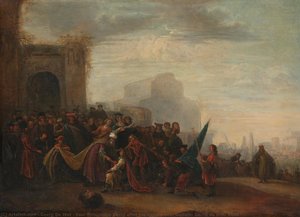
- Saul Welcoming David after his Victory over Goliath: A powerful depiction of triumph and royal encounter, where the weight of the moment is felt through the presence of soldiers, banners, and the grim reminder of the fallen Philistine.
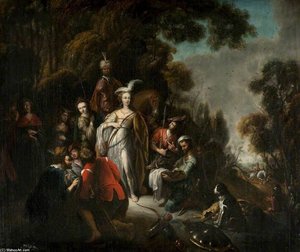
- Finding of Moses in the Nile: A serene yet poignant composition that showcases his ability to integrate human drama within a lush, naturalistic setting.
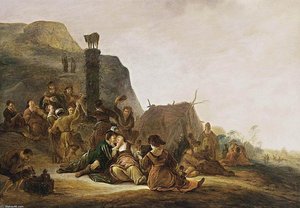
- The Adoration of the Golden Calf: A work demonstrating his capacity for handling large-scale religious themes with complex group dynamics and dramatic light.
A Legacy of Landscape and Spirit
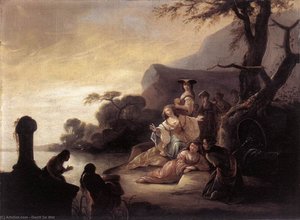
Beyond his biblical commissions, De Wet produced landscapes that reflect the humanist ideals prevalent during the Dutch Golden Age. The meticulous detail with which he depicts natural elements—rolling hills, serene rivers, and expansive skies—underscores his commitment to landscape painting as a genre. In these works, the landscape is rarely just a backdrop; it is an active participant in the emotional resonance of the piece, providing a sense of scale and permanence against the fleeting nature of human history.
His historical significance lies in his ability to bridge the gap between the intense, character-driven drama of the Rembrandt school and the burgeoning interest in the quiet majesty of the Dutch terrain. Through his hands, the spiritual weight of the Old Testament finds a home within the familiar, tranquil beauty of the Low Countries. Though often overshadowed by the titans of his age, Gerrit de Wet remains an essential voice for understanding the stylistic fluidity and the profound cultural richness of seventeenth-century Dutch art.