The Silent Architect of Modernist Drama
In the grand, dissonant tapestry of early 20th-century music, certain names resonate with thunderous clarity, while others linger like a subtle, essential undertone. Gertrud Bertha Schoenberg, born Kolisch in 1898, was undoubtedly the latter—a figure whose creative pulse beat in perfect, albeit complex, synchronicity with her husband, the revolutionary composer Arnold Schoenberg. Born in Karlovary and raised amidst the intellectual fervor of Vienna, Gertrud was far more than a mere companion to a genius; she was a vital collaborator, a librettist of profound psychological depth, and a guardian of a musical legacy that would redefine the boundaries of sound.
Her lineage was one of deep-seated musicality and academic rigor. As the daughter of Rudolf Rafael Kolisch, a distinguished physician and professor at the University of Emden, and Henriette Anna Theresia Hoffmann, Gertrud moved through a world where art and intellect were inextricably linked. This upbringing provided her with the sophisticated cultural vocabulary necessary to navigate the avant-garde movements of her era. Her connection to the musical elite was further solidified by her brother, Rudolf Kolisch, a celebrated violinist and pupil of her husband, creating a familial ecosystem that breathed the very essence of modernism.
A Creative Symbiosis: The Voice of Max Blonda
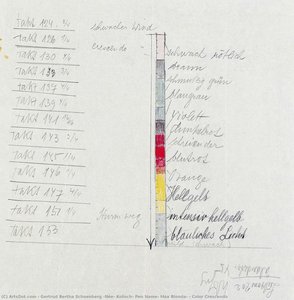
The true emergence of Gertrud’s individual artistic identity can be found in the shadows of a pseudonym. Writing as Max Blonda, she crafted the libretto for Arnold Schoenberg's one-act opera, Von heute auf morgen (From This Day Forward). In this work, she demonstrated an uncanny ability to mirror her husband’s musical innovations through text. Just as his compositions rejected traditional harmonic resolutions in favor of atonality and serialism, her writing eschewed conventional narrative tropes to explore the raw, psychological complexities of the human condition. Through Blonda, she became a distinctive voice within modernist theatre, proving that the written word could be just as disruptive and transformative as a dissonant chord.
Her influence extended beyond the creation of new texts into the preservation and completion of existing masterpieces. It was through her persistent advocacy and artistic vision that the unfinished Die Jakobsleiter (Jacob’s Ladder) was prepared for performance by Winfried Zillig, a project that stands as a cornerstone of Schoenberg's monumental output. Her role in the premiere of the opera Moses und Aron further cements her status as a pivotal figure in the realization of some of the most challenging works in the Western canon.
Legacy and the Preservation of Genius
The passing of Arnold Schoenberg in 1951 did not signal the end of Gertrud’s contribution to music; rather, it transitioned her into a role of historical stewardship. Driven by a profound sense of duty to the art form and her husband's memory, she founded Belmont Music Publishers. This endeavor was specifically devoted to the publication and dissemination of Schoenberg’s works, ensuring that his groundbreaking compositions reached future generations of musicians and scholars. Her work as a publisher was an act of cultural preservation, protecting the integrity of a musical language that many at the time found difficult to embrace.
To reflect on the life of Gertrud Schoenberg is to recognize the profound impact of the "silent partner." While history often focuses on the composer at the podium, it was Gertrud’s literary insight, her administrative tenacity, and her unwavering dedication that provided the structural support for the Schoenbergian revolution. Her life remains a testament to the power of collaborative genius and the enduring strength of a woman who shaped the very fabric of musical modernism.