The Sculptor of Florentine Drama
Giuseppe Piamontini stands as a pivotal figure in the landscape of Florentine Baroque sculpture, an artist whose hands possessed the rare ability to breathe life, tension, and profound psychological depth into cold marble and bronze. Born in Florence in 1664 into a family where the arts were woven into the very fabric of daily life—his father being a painter—Piamontini was destined for a life of creative pursuit. His formative years were spent within the prestigious studio of Giovanni Battista Foggini, a master whose stylistic precepts provided the foundation for Piamontini’s later mastery. This early apprenticeship at the Accademia Fiorentina did more than teach him the technical rigors of carving; it instilled in him a deep reverence for classical ideals and the dramatic potential of the human form.
The trajectory of his talent took him beyond the borders of Tuscany, as he spent five formative years in Rome working under Ercole Ferrata. This period of Roman exposure was transformative, allowing him to absorb the sweeping grandeur of the Roman Baroque. It was during these student years that the influence of masters like Alessandro Algardi began to manifest in his work, particularly in his ability to balance classical restraint with emotive power. By integrating the theatricality of Gian Lorenzo Bernini with the meticulous anatomical precision learned in Rome, Piamontini developed a unique sculptural language—one that prioritized expressive dynamism and a sense of theatrical grandeur that would become his hallmark.
A Mastery of Form and Emotion
Piamontini’s mature work is characterized by an unparalleled ability to translate complex human emotions into tangible, physical presence. He did not merely sculpt figures; he sculpted moments of intense spiritual and psychological conflict. His technical prowess allowed him to manipulate light and shadow across the surfaces of his medium, creating a sense of movement even within the stillness of stone. This mastery is perhaps most evident in his religious commissions, where the weight of divine intervention meets the vulnerability of mortal flesh.
His notable achievements include several works that remain cornerstones of Florentine artistic heritage:
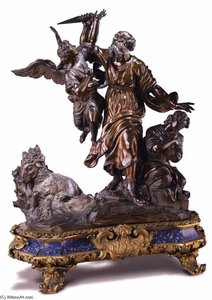
- Sacrifice of Isaac: A monumental bronze work from 1722, this piece captures the agonizing tension between Abraham’s devotion and his paternal instinct, showcasing a visceral sense of suffering.
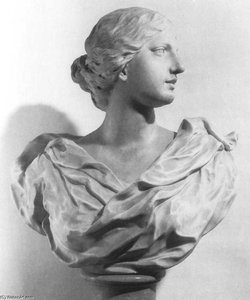
- Bust of a Woman: Created between 1688 and 1689, this marble portrait demonstrates his ability to capture delicate, lifelike textures and a quiet, introspective grace.
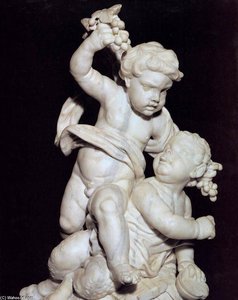
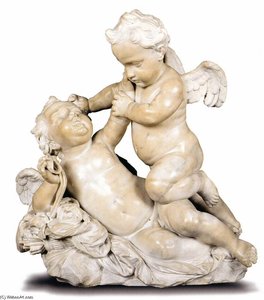
- Two Cupids Wrestling: A testament to his skill in depicting fluid motion and the playful, energetic spirit of the Baroque era.
- Playful Faun and Satyr: An evocative exploration of mythological themes, highlighting his capacity for inventive and vigorous composition.
Legacy within the Baroque Era
As Piamontini’s career progressed, he became a vital collaborator in the grand decorative programs of Florence's most sacred spaces. From the Feroni Chapel in Santissima Annunziata to the works within the Palazzo Pitti, his sculptures contributed to the era's characteristic atmosphere of awe and movement. His ability to execute both large-scale religious figures, such as the St. John the Baptist for the Baptistery, and intimate, highly detailed bronze statuettes, speaks to a versatile genius that could command both vast architectural spaces and private collections alike.
The historical significance of Giuseppe Piamontini lies in his role as a bridge between the late Renaissance traditions and the full-throated emotionalism of the high Baroque. He carried forward the legacy of Michelangelo and Raphael while embracing the modern, theatrical impulses of his time. Through his meticulous carving and profound understanding of narrative, Piamontini ensured that the stone would forever speak of the human condition—capturing the fleeting essence of a breath, the sharp sting of grief, and the eternal light of faith.