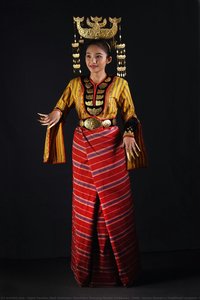
A Legacy Woven in Tradition: The Life and Art of Hajah Pandian Binti Sulaiman
Born in 1950 in the tranquil coastal village of Kampung Rampayan Laut, Kota Belud, Sabah, Malaysia, Hajah Pandian Binti Sulaiman—often affectionately known as Hajjah Pandian—embarked on a life deeply intertwined with the vibrant threads of her Iranun heritage. Her story isn’t merely that of an artist; it is a testament to cultural preservation, dedicated mentorship, and the enduring power of ancestral knowledge passed down through generations. From a tender age, she absorbed the intricate art of weaving from her mother and grandmother, skills honed over centuries within the Iranun community. This early immersion wasn't simply about learning a craft; it was an initiation into a world where patterns held stories, colors embodied emotions, and every woven piece resonated with the spirit of their ancestors.
The Art of Siambitan: A Unique Weaving Tradition
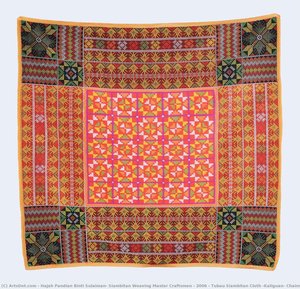
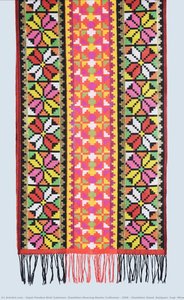
Hajah Pandian became renowned for her mastery of *Siambitan* weaving—a technique unique to the Iranun people. This isn’t a craft learned from books or formal institutions, but rather an oral tradition passed down through meticulous practice and observation. The Siambitan cloth itself is integral to the traditional attire of the Iranun community, often worn during significant life events like weddings and festivities. However, it transcends mere clothing; it's a visual narrative woven with symbolic motifs that reflect the daily lives, beliefs, and cultural identity of the Iranun people. Her expertise extended beyond simply replicating existing designs; she possessed an innate ability to blend traditional elements with contemporary aesthetics, ensuring the art form remained relevant while honoring its roots. The materials used—primarily cotton thread—were transformed under her skilled hands into breathtaking works that captured both the beauty and complexity of Iranun culture. Key motifs within her work include *Kaliguan* (representing a specific pattern or design), *Chains*, *Waves*, and *Winter Melon*, each carrying its own unique significance and contributing to the rich tapestry of meaning embedded in her creations.
Preservation Through Practice: A Lifelong Dedication
Despite lacking formal education in textile arts, Hajah Pandian was a lifelong learner, actively participating in courses and workshops organized by the Sabah State Ministry. This commitment allowed her to refine her skills and deepen her understanding of weaving techniques. Her work wasn’t confined to her village; it graced cultural exhibitions and festivals throughout Sabah and Kuala Lumpur, bringing the beauty of Iranun weaving to wider audiences. A pivotal moment came with an invitation from Kraftangan Malaysia to showcase her artistry in London—her first international representation of Malaysian traditional heritage. This exposure not only elevated her profile but also highlighted the importance of preserving indigenous art forms on a global stage. She understood that the survival of Siambitan weaving depended not just on creating beautiful pieces, but on actively transmitting the knowledge and skills to future generations.
Recognition and Legacy: The Title of Adiguru
In 2019, Hajah Pandian was bestowed with the prestigious title of ‘Siambitan Weaving Master Craftsman’ by the Sabah Handicrafts Development Corporation—a testament to her decades of dedication and unparalleled skill. However, perhaps her most enduring legacy lies in her role as a mentor. She devoted her later years to teaching young weavers within her community, ensuring that the intricate art of Iranun weaving wouldn't be lost to time. This selfless act of knowledge transfer is what truly cemented her status as an *Adiguru*—a highly respected master craftsman whose influence extends far beyond her own creations. Her passing is mourned not just as the loss of a skilled artisan, but as the departure of a cultural guardian who dedicated her life to preserving and elevating the heritage of the Iranun people. Her story serves as an inspiring example of how traditional arts can thrive when nurtured by passion, dedication, and a commitment to sharing knowledge with future generations.