The Rhythms of Stillness: The Art of Hee Eun Cho
Born on May 20, 1972, in the historic city of Jeonju, South Korea, Hee Eun Cho has cultivated a visual language that serves as a bridge between the tangible world and the ethereal realms of thought. Her artistic journey is one defined by a profound search for balance, beginning with her rigorous formal training at Hongik University in Seoul. It was here, through the delicate medium of watercolor, that she first began to master the ability to capture movement within stillness. This foundational period allowed her to develop a technical precision that would later become the bedrock of her explorations into contemporary abstraction.
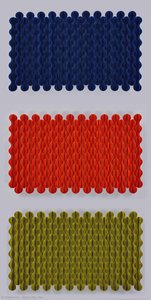
Cho’s work is deeply anchored in the soul of Korean aesthetics, specifically drawing inspiration from the concept of yongpoin. This principle of harmony and equilibrium is not merely a stylistic choice but a spiritual guide that informs every brushstroke and composition. By meticulously recreating wave patterns on paper, she utilizes subtle watercolor techniques to evoke the ebb and flow of nature. Her pieces do not simply represent water or wind; they capture the very essence of transformation and the quiet grandeur found in the most understated natural landscapes.
A Dialogue Between Form and Emotion
The evolution of Cho’s style is marked by a sophisticated transition from representational elements to a pure, minimalist abstraction. Influenced by the monumental legacies of Agnes Martin and Mark Rothko, she embraces the tenets of Flow Art to create works that transcend decorative appeal. Her compositions often utilize a restrained, neutral palette—dominated by soft whites and creamy tones—to foster an atmosphere of deep contemplation and introspection. This deliberate simplicity invites the viewer to look beyond the surface and engage with the symbolic resonance embedded within the layers of pigment.
As her career progressed, Cho expanded her geometric vocabulary, integrating circles and squares into her abstract landscapes. This shift toward geometric abstraction represents a departure from literal imagery in favor of conceptual clarity. Through these fundamental shapes, she explores the relationship between form and emotion, seeking to communicate profound, universal ideas through visual simplicity. Her time studying at the School of the Art Institute of Chicago (SAIC) further enriched this vision, allowing her to blend her traditional Korean sensibilities with a global, contemporary perspective.
Legacy and Artistic Vision
The significance of Hee Eun Cho’s contribution to contemporary art lies in her ability to find the infinite within the minimal. Her work stands as a testament to the power of restraint, proving that art can achieve immense emotional depth without the need for complex narratives or vibrant colors. Through her dedication to the themes of stillness and transformation, she has created a body of work that acts as a sanctuary for the modern viewer—a place where one can find respite from the chaos of the world and reconnect with the fundamental rhythms of existence.
Her artistic achievements can be summarized through several key pillars of her practice:
- Mastery of Flow: The seamless integration of watercolor techniques to simulate natural, organic movement.
- Cultural Synthesis: The harmonious blending of traditional Korean aesthetic principles with Western minimalist traditions.
- Geometric Precision: The use of fundamental shapes to explore the boundaries of conceptual abstraction.
- Emotional Resonance: The creation of meditative spaces through the strategic use of neutral palettes and balanced compositions.