Menu
FREE ART CONSULTATION

Henri Gabriel Ibels

1867 - 1936

Quick Facts

  • Typical colors: putty
  • Died: 1936
  • Works on APS: 9
  • Copyright status: Public domain
  • Born: 1867
  • Color intensity: balanced
  • More…
  • Art period: 19th Century
  • Also known as: Henri-Gabriel Ibels
  • Lifespan: 69 years
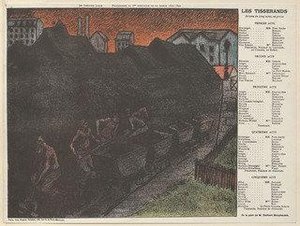
  • Top-ranked work: Program for The Weavers (Les Tisserands) from The Beraldi Album of Theatre Programs
  • Top 3 works:
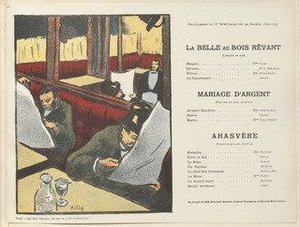
    • Program for The Weavers (Les Tisserands) from The Beraldi Album of Theatre Programs
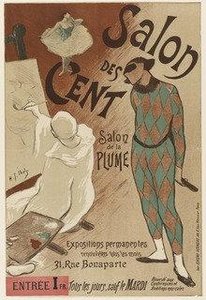
    • Salon des Cent
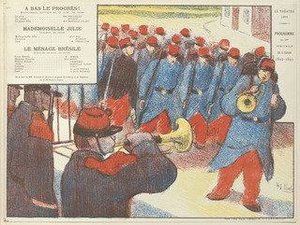
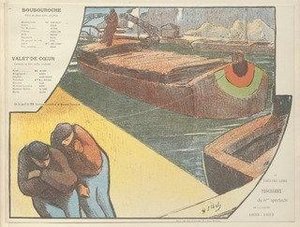
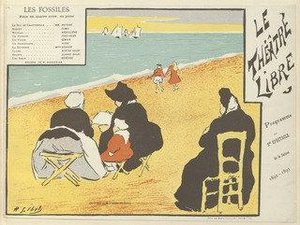
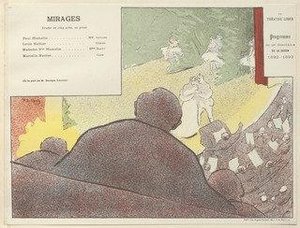
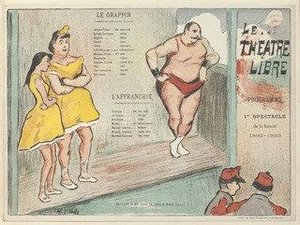
    • Program for Down with Progress (A bas le progrès ), Miss Julie (Mademoiselle Julie) and The Brazilian Household (Le Ménage Brésile) from The Beraldi Album of Theatre Programs

The Parisian Visionary: The Life and Legacy of Henri Gabriel Ibels

Henri Gabriel Ibels (1867–1936) remains a luminous figure in the tapestry of French modernism, a master of line and color who captured the very pulse of the Belle Époque. Born in Paris, his artistic soul was forged in the intellectual crucible of a city undergoing rapid transformation. His early training at the Académie Julian, alongside luminaries such as Pierre Bonnard and Édouard Vuillard, provided him with more than just technical prowess; it placed him at the heart of a burgeoning avant-garde movement. It was here that Paul Sérusier gathered a group of like-minded dreamers, bestowing upon them the name Les Nabis—the prophets. As a founding member of this influential collective in 1889, Ibels helped redefine the boundaries of art, moving away from rigid academic realism toward a more expressive, decorative, and symbolic visual language.

A Symphony of Line and Lithography

The work of Ibels is characterized by a remarkable ability to marry gritty realism with a poetic, almost dreamlike abstraction. While his contemporaries often sought pure abstraction, Ibels found beauty in the tangible textures of Parisian life. He possessed an uncanny talent for translating the energy of the streets—the smoky atmosphere of cafés, the tension of the boxing ring, and the whimsical spectacle of the circus—onto the printed page. His mastery of lithography was particularly profound; he was a "consummate practitioner" of the medium, pushing the limits of color and line to create works that were both commercially viable as advertisements and artistically significant as fine art. Through his use of etching plates and multi-chromatic processes, he contributed to a revolution in printmaking, allowing for a depth of shade and tonal nuance that made the vibrant colors of the era feel truly alive.

Influences and the Spirit of the Age

Ibels’ aesthetic was a sophisticated blend of diverse inspirations, ranging from the satirical bite of Honoré Daumier to the elegant simplicity of Japanese woodcuts. From Daumier, he inherited a penchant for social commentary and an unflinching eye for the human condition, often finding his muses among the laborers and everyday citizens of local bistros. Conversely, the influence of *Ukiyo-e* prints introduced a sense of flattened perspective and bold, rhythmic compositions into his oeuvre. This duality allowed him to navigate between the journalistic and the symbolic. Often referred to by the affectionate moniker "le Nabis journaliste," he bridged the gap between high art and mass media, utilizing his skills for book illustrations, sheet-music covers, and posters that brought sophisticated design into the daily lives of the French public.

Historical Significance and Artistic Triumph

The historical importance of Henri Gabriel Ibels lies in his role as a vital link in the evolution of modern graphic art. His participation in the landmark exhibitions at the Le Barc de Boutteville gallery helped cement the Nabis movement's place in the art historical canon. By treating painting and printmaking as decorative arts that could permeate everyday existence, he challenged the elitism of the era. His legacy is found not only in his exquisite lithographs but in the way he paved the way for future generations of illustrators to treat the printed word and image as a unified, powerful medium. Even decades after his passing, the rhythmic vitality and psychological depth of his depictions of Paris continue to resonate, serving as a nostalgic yet profound window into a vanished world of elegance and upheaval.

Art Quiz

There is only one correct answer for each question.

Question 1:
What artistic movement did Henri Gabriel Ibels belong to?
Question 2:
Ibels collaborated closely with whom, creating iconic images of Parisian nightlife?
Question 3:
What artistic influences did Ibels draw upon in his graphic style?
Question 4:
Ibels’s depictions often focused on subjects like:
Question 5:
In what year did Ibels exhibit his work at the Salon des indépendants?