The Visionary Eye of Oxford: The Life and Legacy of Henry William Taunt
Henry William Taunt (1842–1922) was far more than a mere observer of the English landscape; he was its most devoted chronicler, a man whose lens captured the very soul of Victorian Oxfordshire. Born in the parish of St Ebbe's, Oxford, to a family rooted in the local trades, Taunt’s early life was shaped by the industrious spirit of his father, a plumber and glazier. While his beginnings were humble, his ambitions were vast, spanning the realms of photography, publishing, and even theatrical entertainment. His journey into the visual arts began not with a camera, but through the delicate disciplines of drawing and painting, skills that would later imbue his photographic compositions with a painterly grace and an unerring eye for structural harmony.
The pivotal moment in Taunt’s artistic evolution arrived in 1856 when, at the tender age of fourteen, he joined the studio of Edward Bracher, Oxford's first commercial photographer. Under Bracher's mentorship, the young apprentice transitioned from a general assistant to a master of the craft. By 1868, Taunt had established his own independent photographic business, marking the birth of a professional legacy that would define the visual history of the region. His work was characterized by an extraordinary commitment to realism; where others sought the dramatic or the sensational, Taunt found profound beauty in the precise, the ordinary, and the enduring.
Mastery of Light and the Albumen Process
Taunt’s technical prowess was most evident in his mastery of the
albumen printing process, a sophisticated method that allowed for unprecedented detail and tonal richness. Through this medium, he was able to translate the subtle textures of stone, the soft ripples of water, and the shifting light of the English countryside into permanent, evocative records. His approach was holistic, often blending his photographic expeditions with extensive sketching and watercolor studies. This dual methodology ensured that his photographs were not merely mechanical reproductions but were deeply informed by an artist's understanding of light, shadow, and atmosphere.
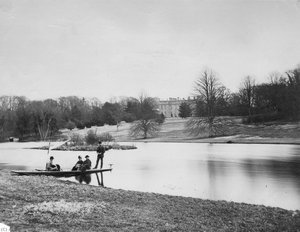
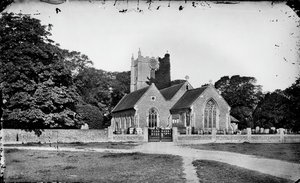
His compositions often achieved a sense of monumental stillness, particularly in his celebrated panoramic works. One might look upon his depictions of
Ditchley Park or the serene architecture of
St Mary’s Church in Wokingham and feel the weight of history preserved in silver and paper. These images possess a rhythmic quality, guiding the viewer's eye through meticulously balanced landscapes that celebrate both the grandeur of nature and the dignity of human craftsmanship.
A Lasting Impression on British Heritage
The significance of Henry William Taunt extends far beyond the borders of Oxfordshire. As a Fellow of the Royal Geographical Society, his work contributed to a broader scientific and cultural movement to document and understand the changing landscape of Britain during a period of rapid industrialization. His multifaceted career—as an author, publisher, and entertainer—allowed him to weave the visual narratives of his photographs into the very fabric of Victorian intellectual life.
Today, Taunt’s body of work serves as an invaluable window into a vanished era. His meticulous documentation provides:
- A definitive visual archive of Victorian architectural heritage and English Gothic structures.
- An intimate look at the social landscapes and leisure activities of the 19th-century countryside.
- A masterclass in early photographic technique and the aesthetic transition from painting to photography.
Through his unwavering dedication to accuracy and his profound love for the English landscape, Henry William Taunt ensured that the fleeting moments of the Victorian age were etched into the permanence of art, leaving behind a legacy that continues to inspire awe and nostalgia in all who behold it.