The Sculptor’s Genesis: From Flensburg to Rome
Born in the quiet landscapes of Flensburg, Herman Wilhelm Bissen was destined for a life defined by the weight and permanence of stone. Though his early academic pursuits at the Royal Danish Academy of Fine Arts in Copenhagen initially leaned toward the fluid medium of painting, it was the tactile reality of sculpture that truly captured his spirit. His journey took a monumental turn in 1824 when a prestigious scholarship carried him to the sun-drenched streets of Rome. There, amidst the echoes of the Italian Renaissance, Bissen found more than just inspiration; he found a mentor in the legendary Bertel Thorvaldsen. Under Thorvaldsen’s watchful eye, Bissen’s style began to shed its Romantic uncertainties, gradually adopting the disciplined precision and idealized anatomical accuracy that would become his hallmark. This formative decade in Italy allowed him to absorb the classical spirit of antiquity, preparing him to return to Denmark not merely as a student, but as a master in his own right.
The Elegance of Form and Classical Echoes
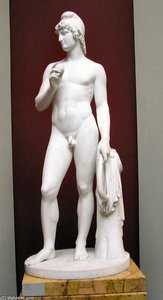
Bissen’s mastery lay in his ability to breathe life into marble and bronze, capturing moments of profound intimacy through a lens of Neoclassical grace. His work often mirrored the rhythmic balance found in antiquity, utilizing the classical
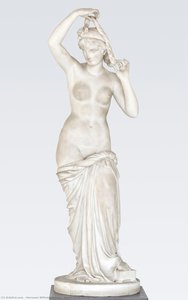
contrapposto position to imbue his figures with a sense of natural movement and organic vitality. A quintessential example is his
Venus Tying up her Hair, where the goddess is caught in a private, delicate ritual. In this piece, the artist achieves a seamless harmony between the weight of the body and the lightness of the moment, drawing inspiration from the ancient
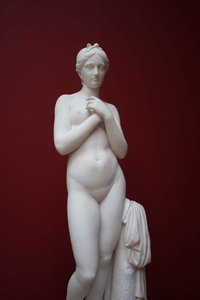
Venus Anadyomene. While he remained deeply rooted in the classical idiom of his mentor, Bissen’s touch was uniquely his own; he often imbued his subjects with a subtle, dramatic tension that distinguished him from the more static traditions of pure Neoclassicism, moving toward a more expressive and humanized portrayal of the divine.
A Monumental Legacy: Nationalism and Realism
As his career progressed, Bissen’s focus shifted from the ethereal realms of myth to the poignant realities of Danish history and national identity. Returning to Copenhagen, he ascended to the heights of the artistic establishment, serving as a professor and eventually as the Director of the Royal Danish Academy. This period saw him translating national sentiment into enduring monuments that captured both the heroism and the tragedy of his era. His works became vessels for collective memory, bridging the gap between the idealized beauty of the past and the burgeoning Realism of the mid-19th century. His significant contributions include:
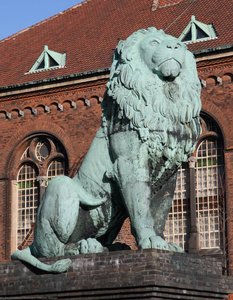
- The Isted Lion, a powerful and enduring symbol of national resilience.
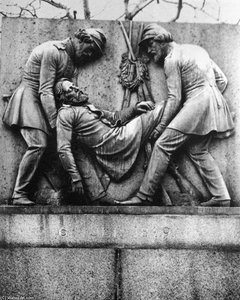
- The poignant stone relief, Soldiers Burying their Dead, which captures the raw emotional depth and historical weight of the Schleswig War.
- The dignified equestrian statue of King Frederik VII, commemorating Danish sovereignty.
Through these monumental commissions, Bissen did not merely sculpt figures; he sculpted the very identity of a nation. His ability to blend classical technique with a profound sense of realism ensured that his work would remain a cornerstone of Danish art, leaving behind a legacy of stone that continues to command respect and evoke reverence in the heart of Copenhagen.