The Architect of Visual Echoes: The Art of Insane Park
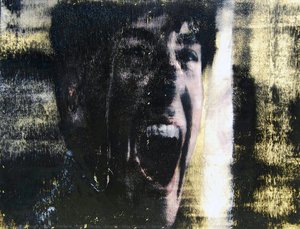
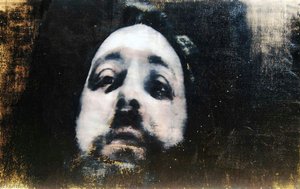
Born in 1980 amidst the vibrant, pulsating energy of Seoul, South Korea, Insane Park has emerged as a profound voice in contemporary art, one that speaks through the very medium of our modern fragmentation. His practice is not merely an observation of the world but a deep, psychological interrogation of the digital and visual currents that define our era. To encounter Park’s work is to enter a space where the boundaries between reality and representation dissolve, leaving the viewer to navigate a landscape constructed from the debris of mass media. He does not simply present images; he deconstructs the very way we perceive them, exposing the invisible structures of power, culture, and cognition that govern our sight.
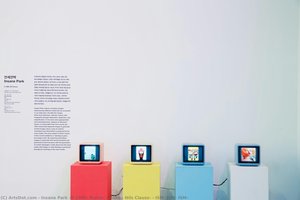
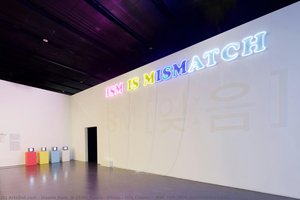
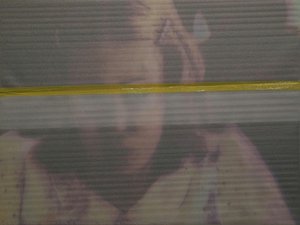
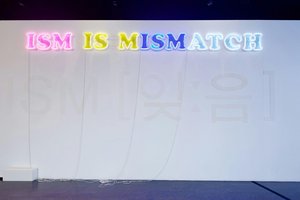
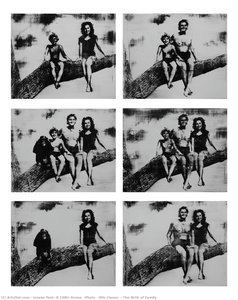
The foundation of Park’s artistic language is rooted in a meticulous, almost obsessive, process of gathering. He acts as a digital scavenger, collecting vast quantities of visual data from television screens, internet platforms, and the relentless stream of social media. This accumulation, which he has eloquently termed “ISM,” serves as a reflection of the repetitive, hypnotic mantra of mass media that permeates daily life. By transforming this raw, often chaotic material into cohesive installations and video works, Park reveals the limitations of our conventional visual systems. He invites us to confront the unsettling truth that much of what we consider "reality" is actually a mediated construction, shaped by the persistent circulation of fixed and manipulated images.
Deconstructing the Gaze: Technique and Influence
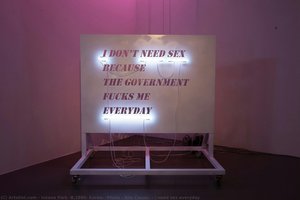
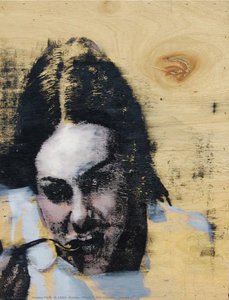
The lineage of Park’s experimentation can be traced back to the pioneering spirit of Nam June Paik. The influence of the father of video art is palpable in Park’s willingness to push beyond traditional boundaries, utilizing technology not just as a tool, but as a subject in itself. Much like Paik, Park seeks to disrupt established visual hierarchies, using the flickering light of screens and the fluidity of digital motion to challenge the viewer's assumptions. His work spans a diverse range of mediums, including video, installation, painting, and photography, all unified by a singular mission: to uncover the political and cultural structures that shape contemporary society.
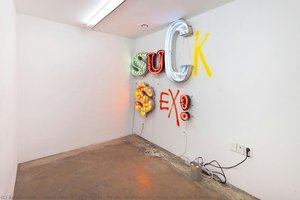
In his more recent explorations, such as the Post Vandalism series, Park has embraced the aesthetics of digital disruption. Utilizing motion graphics, live-streaming formats, and fictitious documentaries, he mimics the ephemeral nature of social media to critique institutional authority. He views the act of "vandalism"—the layering of new meanings over existing structures—as a vital gesture of resistance. To Park, the scribbling, the defacement, and the digital glitch are not mere acts of destruction; they are transformative processes of redefinition that allow for the emergence of new perspectives and discourses in an increasingly saturated world.
Legacy and the Search for Meaning
The significance of Insane Park’s contribution to contemporary art lies in his ability to make the invisible visible. He captures the ephemeral essence of media culture, turning the "noise" of the information age into a profound dialogue about human thought. His work serves as a mirror to our own cognitive processes, reflecting both the brilliance and the fragility of a world mediated through screens. Through his installations, he forces a confrontation with the emptiness and the complexity of modern existence, prompting us to question what remains when the images are stripped away.
Throughout his career, Park has achieved notable recognition within the international art community, marked by pivotal moments such as:
- The Etró Art Prize: A significant milestone that underscored his growing influence and the critical importance of his conceptual explorations.
- Exhibitions at Arario Gallery: Showcasing his ability to bridge the gap between avant-garde experimentation and large-scale, impactful public discourse.
- Presence in Major Art Hubs: His works, often featured in institutions like the Gyeonggi Creation Center, continue to foster innovation and research into the intersection of technology and psychology.
Ultimately, Insane Park remains a vital figure for anyone seeking to understand the psychological landscape of the twenty-first century. He reminds us that while we are constantly being shaped by the images we consume, we also possess the power to deconstruct them, to look beneath the surface, and to find new meanings within the echoes of our media-saturated world.