Ivan Prokofyevich Prokof'yev: Sculptor of Russian Character
Ivan Prokofyevich Prokof’yev (1758-1828) stands as a pivotal, yet often overlooked, figure in 18th and early 19th-century Russian art. More than simply a sculptor, he was a keen observer of human nature, particularly the robust physicality and inherent dignity of the working class – specifically, wrestlers and laborers – capturing their essence with remarkable realism and psychological depth. His oeuvre, though relatively small in scale compared to some of his contemporaries, offers a unique window into the social fabric and cultural values of Imperial Russia during a period of significant transformation.
Born in Saint Petersburg into a family involved in the trade of saddles – a detail that subtly informs his later artistic focus on strength and craftsmanship – Prokof’yev's early life was marked by exposure to both the practical skills of artisans and the burgeoning world of the Imperial Academy of Arts. He received formal training there, initially under Nicolas-François Gillet and later under Fyodor Gordeev, absorbing the classical techniques prevalent at the time while simultaneously developing a distinctive style. Crucially, he spent several years in Paris, immersing himself in the work of masters like Jean-Baptiste Parny and honing his skills through direct observation and study. This Parisian experience proved transformative, shifting him away from purely academic pursuits towards a more expressive and nuanced approach to portraiture and sculpture.
The Wrestler’s Soul: A Focus on Physicality
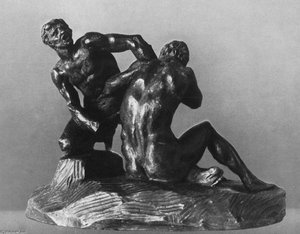
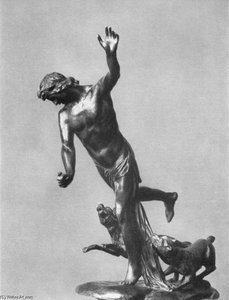
Prokof'yev’s most celebrated works are undoubtedly his depictions of wrestlers. These aren’t idealized heroes or romanticized figures; they are men of sweat, muscle, and grit – embodiments of physical prowess and the demands of their profession. His “Actaeon Pursued by Dogs” (1788), a powerful bronze sculpture now housed in the State Hermitage Museum, exemplifies this approach. The scene is not one of heroic triumph but of desperate struggle, capturing the raw emotion and vulnerability of the hunted athlete. Prokof’yev masterfully conveys the wrestler's exhaustion, pain, and unwavering determination through subtle shifts in posture, facial expression, and the texture of the bronze itself.
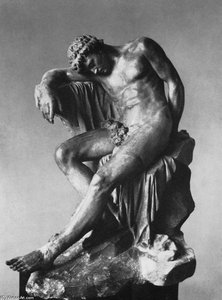
Works like “Morpheus Sleeping” (1789) further demonstrate his ability to imbue even seemingly mundane subjects with profound psychological resonance. The sculpture depicts a wrestler lost in slumber, revealing not just physical strength but also a quiet vulnerability and perhaps even a hint of melancholy. These aren’t simply representations of athletic bodies; they are portraits of men wrestling with their own inner demons – a theme that would become increasingly prevalent in Russian art throughout the 19th century.
Beyond the Wrestler: Busts and Portraits
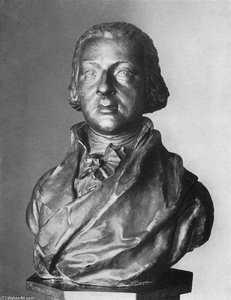
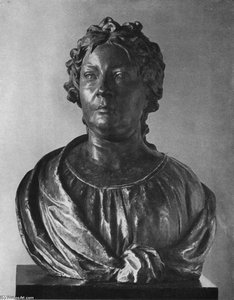
While his wrestlers hold a prominent place in Prokof’yev's legacy, he was also a prolific sculptor of busts and portraits. He produced remarkably lifelike depictions of numerous figures, including members of the aristocracy – such as the renowned wrestler A.J. Labzina – and notable public officials. His ability to capture individual character and personality with remarkable accuracy is evident in these works, showcasing his technical skill and keen observational abilities.
His portrait of Emperor Paul I (though unfinished) reveals a sophisticated understanding of classical ideals combined with a distinctly Russian sensibility. The sculpture’s emphasis on strength and dignity reflects the emperor's own self-image and the aspirations of the Imperial court.
Influence and Legacy
Prokof’yev’s work exerted a significant influence on subsequent generations of Russian sculptors, particularly those associated with the Academy of Arts. His emphasis on realism, psychological depth, and the portrayal of everyday subjects paved the way for a more socially conscious and emotionally resonant approach to sculpture in Russia. His commitment to capturing the dignity and character of ordinary people – especially laborers – resonated deeply with the changing social landscape of Imperial Russia.
Despite his considerable talent and contributions to Russian art, Prokof’yev remained largely outside the circles of official recognition during his lifetime. However, in recent decades, his work has been increasingly appreciated for its artistic merit and historical significance. Today, Ivan Prokofyevich Prokof’yev is recognized as a key figure in the development of 18th- and early 19th-century Russian sculpture – a sculptor who captured the spirit of his time with remarkable skill and insight.