The Journey from Arbroath to the Antipodes
Born in the rugged, salt-sprayed landscape of Arbroath, Scotland, James Johnstone Barnet carried within him the disciplined spirit of a builder’s son. His life’s trajectory is a sweeping narrative of ambition, moving from the structured traditions of the United Kingdom to the untamed potential of the Australian frontier. After honing his technical prowess in London—studying the delicate art of drawing under William Dyce and mastering architectural principles with CJ Richardson—Barnet arrived in Sydney in 1854. He brought with him a refined European sensibility, a meticulous eye for detail, and a deep reverence for classical proportions that would soon transform a burgeoning colonial outpost into a sophisticated urban landscape. His early years in Australia, working alongside established figures like Edmund Blacket, served as a vital period of adaptation, where he learned to harmonize his classical training with the raw, elemental materials of the New South Wales territory.
Sculpting a Colonial Identity
As the Colonial Architect from 1862 to 1890, Barnet became the primary sculptor of the New South Wales skyline, leaving an indelible mark on the very fabric of the nation. His architectural language was one of grandeur and permanence, characterized by a masterful command of
Neoclassical,
Italianate, and
Gothic Revival styles. He possessed a singular ability to blend the heavy, enduring presence of local sandstone with the intricate, ornamental elegance of the
Beaux Arts aesthetic. This era of his career was marked by an almost superhuman scale of production; he did not merely design buildings, but rather constructed the essential infrastructure of a developing society. His portfolio was a vast tapestry of civic necessity, including:
- The majestic General Post Office in Sydney, a cornerstone of colonial communication.
- A sprawling network of courthouses and police stations that established the rule of law across the colony.
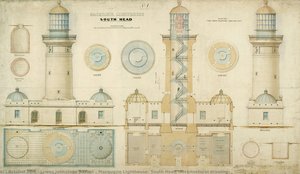
- Essential lighthouses, such as the reconstruction of the Macquarie Lighthouse, which ensured the safety of maritime commerce.
- Public institutions like the Australian Museum and various telegraph offices that fostered scientific and social progress.
His versatility was perhaps most remarkably demonstrated by his ability to balance local colonial needs with a global architectural vision, showcasing a commitment to craftsmanship that reached far beyond the shores of Sydney.
A Legacy Carved in Sandstone
The enduring significance of James Johnstone Barnet lies in the permanence of his creations. To walk through the streets of Sydney today is to engage in a silent dialogue with his memory; his structures remain as monolithic sentinels of a bygone era, providing a sense of historical continuity to a modern metropolis. Through his use of
sandstone and brick, he anchored the ephemeral nature of colonial life into something monumental and lasting. His work represents more than just architectural achievement; it embodies the transition of New South Wales from a fledgling settlement to a confident, structured society. Even as the world around these buildings has changed, Barnet’s legacy remains etched in the heavy façades and harmonious proportions of the landmarks that continue to define the Australian identity, ensuring that his vision of elegance and order will endure for generations to come.