The Visionary Landscapes of Jan ten Compe
In the vibrant tapestry of the eighteenth-century Dutch Republic, few artists captured the quiet grandeur and civic pride of the era as meticulously as Jan ten Compe. Born in Amsterdam in 1713, ten Compe emerged as a master of the landscape tradition, breathing life into the bustling harbors and serene countryside of his homeland. His life, which concluded in his birthplace in 1761, was defined by an unwavering commitment to realism and a profound ability to translate the architectural majesty of Dutch towns onto canvas. As both a painter and an art dealer, he possessed a unique dual perspective, understanding not only the aesthetic nuances of a brushstroke but also the cultural value of the imagery he produced.
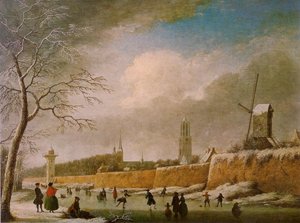
The foundation of ten Compe’s artistry was laid under the watchful eye of Dirck Dalens III, a mentorship that instilled in him the technical rigor necessary to master complex urban compositions. However, his creative spirit was most deeply shaped by the legacies of Jan van der Heyden and Gerrit Berckheyde. From these masters, he inherited a fascination with atmospheric perspective—the delicate art of using light, haze, and color shifts to create an illusion of infinite distance. This influence allowed him to transform mere topographical records into emotive experiences, where the viewer does not simply look at a city, but feels the humid air of a canal or the golden warmth of a setting sun reflecting off a brick facade.
A Legacy Written in Stone and Water
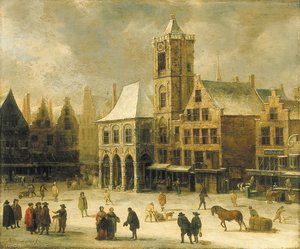
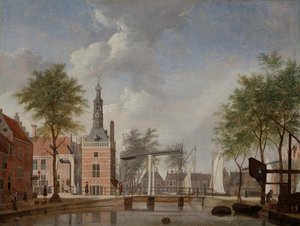
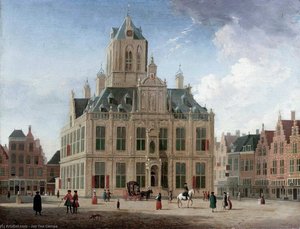
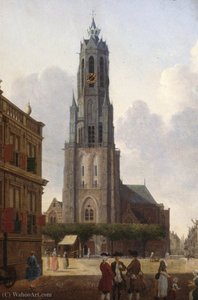
Ten Compe’s oeuvre serves as a visual archive of the Dutch Golden Age's enduring spirit. His canvases frequently focused on the most prestigious landmarks of his time, presenting them with a dignity that spoke to the prosperity of the Republic. Through his work, we are transported to the heart of the Netherlands' most iconic locations:
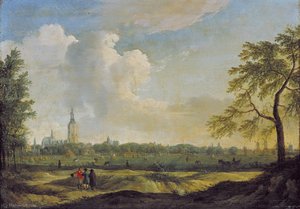
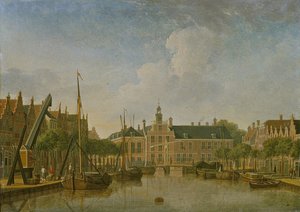
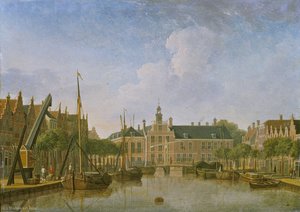
- The Hague: His depictions, such as the view from the north-northwest or the bustling scenes at the Bierkade and Groenewegje, capture the intersection of urban life and tranquil waterways.
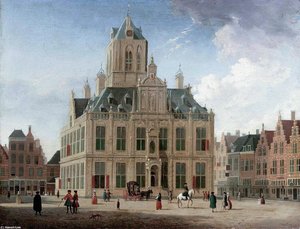
- Delft: He rendered the architectural splendor of the Nieuwe Kerk and the civic importance of the Town Hall with a precision that honored the city's historical weight.
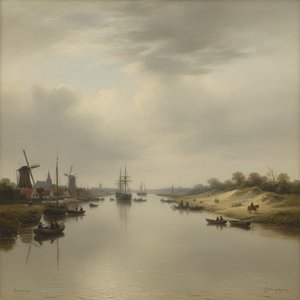
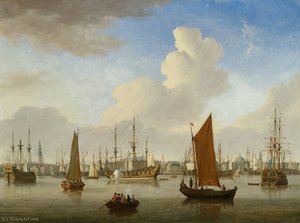
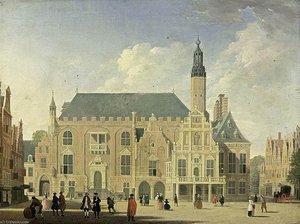
- Rotterdam and Haarlem: His landscapes often showcased the vital energy of Rotterdam’s harbors and the stately atmosphere of Haarlem’s urban centers.
Beyond his technical skill, ten Compe’s success was cemented by his ability to connect with the influential figures of his day. His works were highly sought after by wealthy patrons, including Mayor Rendorp of Amsterdam and Mr. De Groot of The Hague. These commissions were more than mere transactions; they were endorsements of his ability to capture the very essence of Dutch identity. By documenting the prominent buildings and landmarks of cities like Leiden and Amsterdam, ten Compe created a lasting heritage, ensuring that the architectural triumphs of his era would be preserved through the lens of his masterful realism.