Jean-Pierre Norblin de La Gourdaine: A Polish Enlightenment Painter
Jean-Pierre Norblin de La Gourdaine (Polish: Jan Piotr Norblin; 15 July 1745 – 23 February 1830) stands as a pivotal figure in the artistic landscape of Poland during the Enlightenment, recognized for his masterful blend of Rococo elegance and journalistic observation. Born in France, he embarked on an illustrious career that culminated in establishing himself as a celebrated artist within the Polish court, leaving an indelible mark on both visual art and cultural history.
- Early Life & Training: Norblin’s formative years were spent honing his artistic skills in Paris under luminaries like François Boucher and Louis Michel Vanloo, absorbing influences from Rembrandt and Antoine Watteau – artists whose techniques profoundly shaped his stylistic vision.
- The Polish Connection: A chance encounter with Adam Kazimierz Czartoryski in 1772 propelled him into Poland’s orbit. Invited to serve as the prince's court artist, Norblin spent nearly two decades documenting the opulent life of Czartoryski’s estate and capturing portraits of prominent figures—a testament to his dedication and artistic prowess.
- Royal Patronage & Artistic Output: His patronage extended beyond Czartoryski; he collaborated with King Stanisław August Poniatowski, adorning Arkadia Palace (Nieborów) and undertaking ambitious decorative projects. Notably, he illustrated Ignacy Krasicki’s poem “Myszeida,” cementing his reputation as a versatile artist adept at diverse mediums.
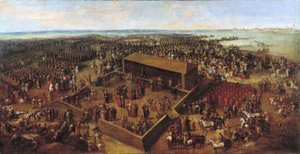
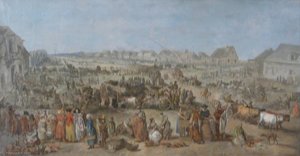
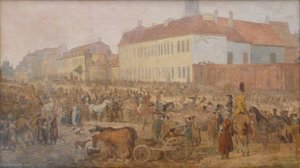
- Style & Technique: Norblin's artistic style epitomized the Rococo tradition, prioritizing graceful compositions and pastel hues reminiscent of Watteau’s fêtes galantes. However, he distinguished himself through meticulous realism—a deliberate departure from purely decorative conventions—incorporating detailed depictions of daily life alongside astute commentary on political events. His portraits were particularly noteworthy for their psychological depth and accuracy.
- Legacy & Significance: Norblin's oeuvre constitutes a crucial record of the Polish Enlightenment, offering invaluable insight into aristocratic society and artistic sensibilities of the era. He mentored Jan Rustemas, contributing to the artistic education of future generations, and his work continues to inspire admiration for its harmonious fusion of elegance and observation—a singular achievement in Polish art history.
Notable Works & Artistic Influences
Norblin’s artistic journey was marked by collaborations with influential figures like François Boucher and Louis Michel Vanloo, who instilled in him a foundational understanding of classical painting principles. The stylistic imprint of Rembrandt—particularly his masterful use of chiaroscuro—became another cornerstone of Norblin's technique. Above all, Antoine Watteau served as an enduring inspiration, guiding him toward the creation of idyllic scenes infused with subtle emotion and capturing the spirit of aristocratic gatherings.
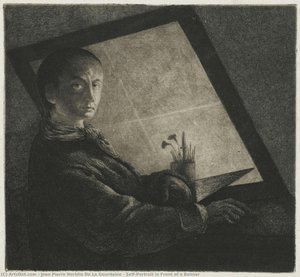
- Self-Portrait in Front of a Banner: This evocative piece exemplifies Norblin’s commitment to portraying subjects with psychological nuance—a hallmark of his artistic approach.
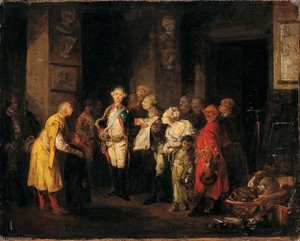
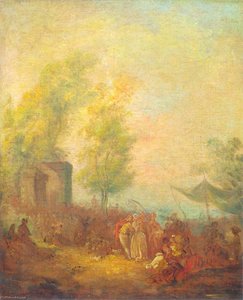
- Untitled (AQZVHQ): A testament to his exploration of color and texture, this artwork showcases Norblin's ability to convey atmosphere and emotion effectively.
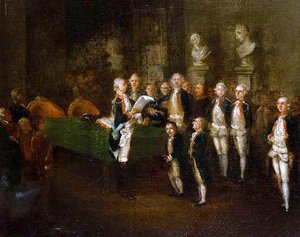
- Untitled (AQZVHW): This portrait exemplifies Norblin’s meticulous attention to detail and his skill in capturing the essence of his subjects—a characteristic that distinguishes him from many contemporaries.
A Reflection on His Artistic Vision
Jean-Pierre Norblin de La Gourdaine recognized the importance of blending artistic beauty with social commentary. He believed that art should not merely delight the eye but also stimulate intellectual engagement—a conviction reflected in his depictions of Polish aristocratic life and his astute observations about political currents. By skillfully merging Rococo aesthetics with journalistic precision, Norblin achieved a remarkable feat: preserving the grandeur of an era while simultaneously conveying its complexities.