The Soul of Kashubia: The Life and Legacy of Jerzy Walkusz
In the quiet, storied landscapes of Hopowo, Poland, a village deeply embedded in the rhythmic pulse of Kaszubian history, the life of Jerzy Walkusz (1930–2017) began to unfold as a profound tribute to cultural endurance. To understand Walkusz is to understand the very soil of his homeland; he was not merely an artisan but a guardian of a vanishing world. His early years were defined by the rugged, honest labors of a blacksmith and farmer, disciplines that instilled in him a fundamental respect for raw materials and the ancestral techniques required to shape them. This foundation of manual mastery would later become the bedrock upon which he built his monumental mission: the reconstruction of the Kashubian sonic identity.
As Walkusz matured, his creative spirit transcended the practicalities of rural life, finding a deeper calling in the preservation of intangible heritage. He recognized that the music and rituals of the Kashubian people were at risk of fading into silence, and thus, he sought to give them a physical voice. This passion led to the founding of the ensemble “Hopowianie,” an endeavor that served as both a musical collective and a vessel for cultural revitalization. Through this group, Walkusz transformed from a craftsman of metal and earth into a restorer of sound, embarking on a meticulous journey to breathe life back into historic instruments that had long been relegated to the stillness of museum displays.
The Art of Reconstruction and the Mastery of Sound
The work of Jerzy Walkusz was characterized by an extraordinary synthesis of rigorous historical research and intuitive artistic innovation. He did not simply aim to replicate objects; he sought to capture the very essence of their ritualistic significance. His process involved a painstaking study of museum artifacts, where he analyzed the structural nuances of ancient tools and instruments to ensure his reconstructions remained faithful to their original forms. Yet, within this fidelity, there was room for his own vision—a subtle adaptation that allowed these pieces to function not just as relics, but as living, breathing components of contemporary folk expression.
His technical mastery is perhaps most vibrantly expressed in his prolific creation of stringed instruments. The sheer scale of his dedication is evident in the approximately fifty fiddles he meticulously crafted, each one a testament to his precision and devotion. Beyond the violin family, Walkusz’s repertoire of craftsmanship included a variety of traditional tools and percussion instruments that defined the Kashubian soundscape:
- The Devil’s Fiddle: A hauntingly beautiful creation that showcases his ability to blend folklore with structural complexity.
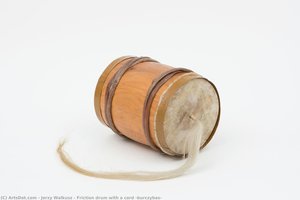
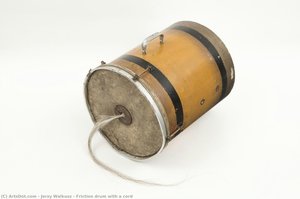
- Burczybas (Friction Drum): An instrument of deep, resonant character, which he reconstructed to preserve the unique percussive textures of regional ceremonies.
- Perłaczkas: Traditional instruments that required a delicate touch and an intimate understanding of wood carving and acoustic properties.
A Lasting Resonance in Polish Heritage
The historical significance of Jerzy Walkusz extends far beyond the physical objects he left behind. His true achievement lies in his role as an educator and a bridge between generations. By spearheading workshops and public demonstrations, he ensured that the specialized skills of blacksmithing, wood carving, and instrument making were passed down to younger hands, fostering a renewed sense of pride within the Kashubian community. He understood that for a culture to survive, its traditions must be practiced, not just remembered.
Today, the legacy of Walkusz remains an enduring presence in the heart of Poland. His work serves as a vital link to a past where art, labor, and identity were inextricably woven together. Through his tireless efforts to safeguard the intangible elements of his heritage, he has ensured that the melodies of the Kashubian people continue to resonate with clarity and strength, long after the master craftsman himself has departed. He remains a singular figure whose life work stands as a monumental achievement in the preservation of European folk artistry.