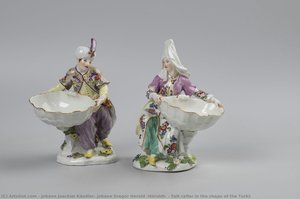
Johann Joachim Kändler & Johann Gregor Herold: Masters of Meissen Porcelain
Johann Joachim Kändler (1706 – 1775) and Johann Gregor Herold (1696 – 1775) stand as titans in the annals of European art history, inextricably linked to the rise of Meissen porcelain—a testament to Baroque elegance and Rococo exuberance. Their collaborative efforts at the Meissen Manufactory revolutionized decorative arts, establishing a style that captivated aristocratic patrons across Europe for decades to come. Kändler’s formative years were steeped in artistic tradition. Born in Jena, Prussia (then part of Saxony), he apprenticed under Johann Friedrich Eberhard Rückert, honing his sculptural skills and absorbing the stylistic precepts of German Baroque sculpture. This training instilled a meticulous attention to detail and an unwavering commitment to classical ideals—qualities that would permeate his porcelain creations. His early works showcased a mastery of marble carving, reflecting the prevailing artistic sensibilities of his time. However, it was his dedication to Meissen’s burgeoning porcelain industry that cemented his legacy. From 1731 until his death in 1775, he served as Director of Sculpture at the factory, overseeing an astonishing output of over 40,000 sculptures—a staggering achievement for its era. Herold arrived at Meissen in 1729 and quickly ascended to prominence as Painter of Porcelain. Like Kändler, he possessed a formidable artistic background, having studied under Johann Christian Feyrer and Peter Christoph Rubens. His training emphasized the expressive potential of oil painting, equipping him with the tools to capture fleeting moments of emotion and drama—skills that proved invaluable in portraying mythological narratives and pastoral scenes on porcelain surfaces. Herold’s distinctive style embraced Rococo ornamentation, favoring delicate pastel hues and swirling arabesques to convey a sense of airy grace. He skillfully blended classical influences with Baroque techniques, resulting in compositions that were both intellectually stimulating and aesthetically captivating. The partnership between Kändler and Herold was instrumental in shaping Meissen's artistic identity. They established a harmonious dialogue between sculpture and painting—a crucial element in creating immersive porcelain installations. Kändler’s sculptures provided the foundational forms for Herold’s paintings, while Herold’s brushstrokes imbued Kändler’s figures with vitality and movement. Together, they elevated Meissen porcelain to unparalleled heights of artistic sophistication, establishing a visual language that continues to inspire artists today. Their creations celebrated idealized beauty—drawing inspiration from classical mythology and pastoral landscapes—and embodied the spirit of the Enlightenment. Their influence extended far beyond the confines of Meissen. The Kändler-Herold style became synonymous with European porcelain art, influencing workshops across Germany, England, and France. Collectors sought out their masterpieces, recognizing them as emblems of refined taste and aristocratic patronage. Their sculptures and paintings served as models for subsequent generations of artists, ensuring that their contribution to decorative arts would endure for centuries. The enduring appeal of Kändler’s and Herold’s porcelain art lies in its ability to transport viewers back to a bygone era—a time of opulent grandeur and artistic innovation.- Notable Works: “Turks Salt Cellar,” “Venus and Adonis”
- Style Characteristics: Baroque Sculpture, Rococo Painting, Classical Influence
- Legacy: Established Meissen Porcelain Style; Influenced European Decorative Arts