The Enigmatic Johann Sebastian Griebel: A Life Shrouded in Mystery
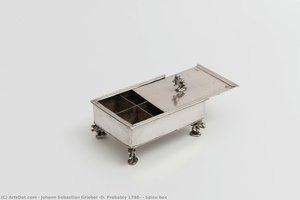
Johann Sebastian Griebel (D. Probably 1788) remains a figure lost to the mists of art history, an artist whose life details are frustratingly scarce. What little we know is gleaned from the few surviving works attributed to him – primarily delicate and intricately painted spice boxes – suggesting a specialization that hints at a particular clientele or workshop affiliation. The “Probably 1788” attached to his name underscores the uncertainty surrounding even his death date, leaving scholars to piece together a narrative based on stylistic analysis and contextual clues rather than concrete biographical evidence. It is believed he was active in Europe during the late 18th century, a period of significant artistic transition between the Rococo and Neoclassical movements. The lack of extensive documentation makes it difficult to pinpoint his exact origins or training; however, the refined technique evident in his work suggests an apprenticeship under a skilled master, possibly within a courtly setting where such elaborate decorative objects were highly prized.
A Master of Miniature Worlds: Griebel’s Artistic Style
Griebel's known oeuvre consists almost entirely of spice boxes – not merely functional containers but exquisite works of art in their own right. These small, often rectangular vessels are characterized by a remarkable attention to detail and a delicate, almost enamel-like finish. The surfaces are typically adorned with floral motifs, landscapes, or scenes from everyday life, rendered with a precision that belies their diminutive scale. His palette favors soft pastels and muted tones, creating an atmosphere of quiet elegance and refinement. The influence of Rococo aesthetics is palpable in the playful compositions and ornate detailing, yet there’s also a nascent sense of order and clarity that foreshadows the emerging Neoclassical style. The boxes weren't simply painted; they were meticulously crafted, often incorporating mother-of-pearl inlay or gilded accents to enhance their visual appeal. This dedication to craftsmanship suggests Griebel wasn’t solely a painter but possessed broader skills in decorative arts.
Context and Influences: The World of 18th-Century Decorative Arts
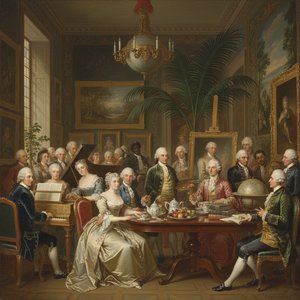
To understand Griebel's work, one must consider the cultural context in which it was created. The 18th century witnessed a flourishing of decorative arts, driven by the patronage of wealthy aristocrats and the growing demand for luxury goods. Spice boxes, while seemingly modest objects, held symbolic significance as indicators of status and taste. They were often commissioned as gifts or used to display precious spices brought from distant lands – emblems of wealth and global trade. The artist likely drew inspiration from contemporary porcelain painting, particularly the delicate floral designs popular at factories like Meissen and Sèvres. Furthermore, the miniature landscapes found on some boxes may reflect the influence of Dutch Golden Age painters known for their detailed depictions of nature. The emphasis on realism and meticulous observation in his work aligns with broader artistic trends of the period, which valued scientific accuracy alongside aesthetic beauty.
Legacy and Historical Significance
Despite the limited number of works definitively attributed to him, Johann Sebastian Griebel occupies a unique niche within the history of 18th-century decorative arts. His spice boxes offer a fascinating glimpse into the tastes and sensibilities of the elite during a period of significant social and artistic change. While he may not have achieved widespread fame like his more celebrated contemporaries, Griebel’s mastery of miniature painting and dedication to craftsmanship deserve recognition. The surviving examples of his work are now highly sought after by collectors and museums, serving as tangible reminders of a bygone era. His legacy lies in the exquisite beauty and delicate artistry of these small but captivating objects – testaments to a skill that has endured through the centuries, even as the artist himself remains largely unknown. Further research and attribution efforts may one day shed more light on this enigmatic figure and his place within the broader landscape of European art history.