The Weaver of Human Narratives
Jon Eric Riis stands as a transformative figure in the realm of contemporary textile art, an artist who has successfully elevated the ancient, often overlooked craft of hand-woven tapestry to the heights of fine art. Emerging from the vibrant artistic landscape of the United States, Riis has spent decades refining a practice that transcends mere decoration. His work is not simply about the interlacing of threads, but rather a profound exploration of materiality, pattern, and symbolic resonance. Through his meticulous use of silk, metallic threads, and even embellishments like pearls and glass beads, he creates undulating surfaces that demand both visual and emotional engagement from the viewer.
The essence of Riis’s artistry lies in his ability to weave together the threads of human history, culture, and identity. His subject matter is vast and deeply philosophical, drawing inspiration from diverse cultural products to reinterpret complex themes such as race, religion, war, beauty, and spirituality. He possesses a unique capacity to take archetypal forms—such as the kimono or the robe—and imbue them with critical social commentary. In his hands, a garment is never just a piece of clothing; it is a vessel for exploring the shared internal structures of humanity, revealing that beneath our outward expressions of personal taste and status, we possess a common fundamental essence.
Technique as Metamorphosis
To witness a Riis tapestry is to observe a masterclass in technical prowess and painterly realism. His process is one of extreme patience and precision, where every thread is placed with intentionality to achieve remarkable tonal subtlety. He often utilizes silk chiffon and linen to create ethereal qualities that capture light and movement, mirroring the delicate balance between life and death. This mastery extends beyond the loom itself; Riis frequently incorporates hand-stitched elements such as freshwater pearls, coral, and gemstones, adding a sculptural dimension to his woven works.
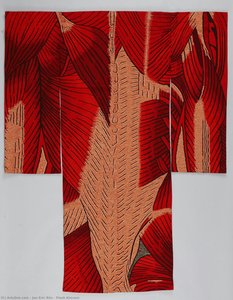
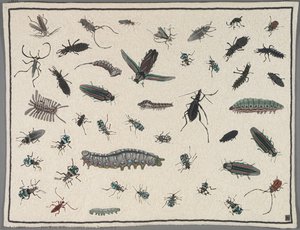
This dedication to texture allows him to explore themes of metamorphosis and resilience. In pieces like 'Insect Icon Tapestry', the stylized figures rendered in muted ochre and indigo serve as meditations on the cycles of nature and the strength found in transformation. Similarly, his work 'Flesh Kimono' utilizes the concept of layered textiles to delve into themes of vulnerability. By manipulating the weight and translucency of different fibers, he creates a tactile language that speaks to the complexities of the human condition, making the physical sensation of the art inseparable from its conceptual meaning.
Legacy and Recognition
The historical significance of Jon Eric Riis’s contribution to the textile arts is reflected in the prestigious institutions that house his work. His tapestries are not merely found in private collections but are celebrated within the permanent collections of some of the world's most esteemed museums, including:
- The Art Institute of Chicago
- The Smithsonian American Art Museum (Renwick Gallery)
- The American Craft Museum in New York
Throughout his illustrious career, Riis has been the recipient of numerous accolades that underscore his importance to the contemporary art world. His achievements include a National Endowment for the Arts grant, a prestigious Fulbright Grant, and an Honorary Award at the 10th International Triennial of Tapestry in Poland. By challenging the traditional perception of tapestry as a luxury item for the elite and repositioning it as a medium for provocative social discourse, Jon Eric Riis has ensured that the ancient art of weaving remains a vital, breathing component of modern artistic expression.