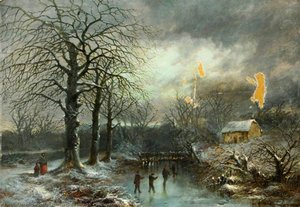
Joseph Hallam Hawkesworth: A Winter’s Embrace
The evocative landscapes of Joseph Hallam Hawkesworth (1827-1908) offer a poignant glimpse into 19th-century Britain, particularly the serene beauty of its winter countryside and the quiet dignity of biblical scenes. Born in Sheffield, Yorkshire, Hawkesworth’s artistic journey was shaped by his family's history – his father, a silversmith – and a deep connection to the natural world. While not initially celebrated with the fanfare of some contemporary artists, Hawkesworth quietly cultivated a distinctive style characterized by atmospheric perspective, subtle tonal shifts, and an almost melancholic tenderness in his depictions of rural life and religious narratives.
Early influences are somewhat obscured, though it’s believed he received foundational art training before pursuing a career as a teacher. This dual role – educator and artist – likely informed his approach, fostering a keen eye for detail and an appreciation for the nuances of light and color. Hawkesworth's artistic development coincided with a period of significant social and industrial change in Britain; the rise of factories and urban centers contrasted sharply with the enduring appeal of the countryside, a theme that repeatedly surfaces in his work. His paintings aren’t merely representations of landscapes; they are meditations on time, memory, and the relationship between humanity and nature.
Landscapes of Yorkshire and Beyond
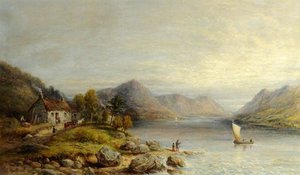
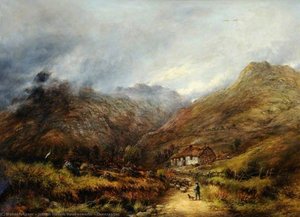
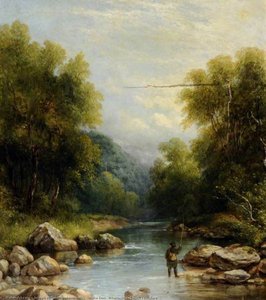
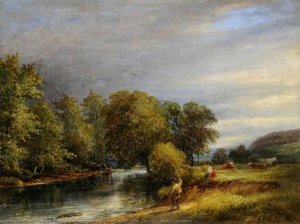
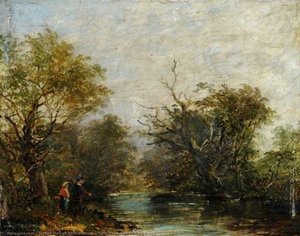
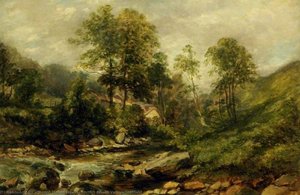
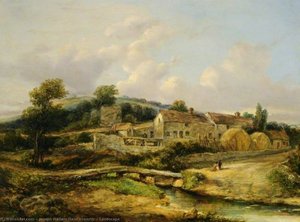
Hawkesworth is perhaps best known for his winter scenes – particularly those depicting the dramatic beauty of Loch Earn in Scotland. These paintings capture a sense of isolation and stillness, with snow-laden hillsides and frozen lochs rendered in muted blues, greys, and whites. The use of atmospheric perspective—the subtle blurring of distant features—creates an illusion of depth and distance, drawing the viewer into the heart of the landscape. His depictions of Yorkshire’s rolling hills, often bathed in the soft light of dawn or dusk, reveal a deep understanding of local geology and vegetation.
Beyond his Yorkshire landscapes, Hawkesworth also produced a series of biblical scenes, notably “The Good Shepherd,” which showcases his ability to imbue religious narratives with emotional resonance. These works are characterized by their quiet dignity and understated beauty, avoiding overt theatricality in favor of subtle gestures and expressions. He frequently employed a limited palette and focused on capturing the essence of the story rather than elaborate details.
Technique and Style
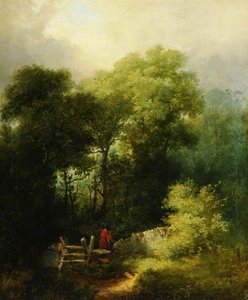
Hawkesworth’s artistic technique was rooted in traditional oil painting methods, but he possessed a remarkable sensitivity to color and light. He favored layering thin glazes of paint to build up tonal values gradually, creating a luminous effect that enhanced the sense of atmosphere. His brushwork is generally smooth and controlled, yet imbued with a subtle dynamism—a feeling of movement captured in the flow of clouds or the ripple of water. Unlike some of his contemporaries who embraced bold, expressive brushstrokes, Hawkesworth’s style is characterized by restraint and precision.
He was influenced by the Romantic landscape painters of earlier generations, particularly Turner and Constable, but he developed a distinctly personal approach—one that prioritized observation and emotional response over mere imitation. Hawkesworth's work can be seen as a bridge between the grand narratives of Romanticism and the more introspective tendencies of later movements.
Legacy and Recognition
Despite his talent, Hawkesworth’s recognition during his lifetime was modest. He primarily worked as a teacher and maintained a relatively low profile, focusing on his artistic practice rather than seeking public acclaim. However, his paintings have since been appreciated for their quiet beauty and understated emotional power. Today, his works are held in collections at the Sheffield Museums and Rotherham Museums, Arts and Heritage, offering viewers a chance to connect with this often-overlooked British artist.
Recent research, including detailed genealogical investigations and archival studies, has shed new light on Hawkesworth’s life and career. Artists like Chris Hobbs have dedicated considerable effort to documenting his work and tracing its origins, ensuring that his artistic legacy endures. His story serves as a reminder of the many talented artists who contributed significantly to British art history but whose contributions were not always fully recognized during their time.