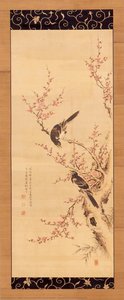
Kamei Tobei (1901-1977): A Kyoto Sosaku Hanga Pioneer
Kamei Tobei, born Eiichi Takamatsu in 1901, stands as a pivotal figure in the history of Japanese floral and bird printmaking—specifically within the influential Sosaku Hanga movement. His artistic journey began with formal training at Kyoto Kaiga Semmon Gakko, where he honed his skills under luminaries like Kawabata Ryūshi and Yamada Kōun, absorbing the foundational principles of traditional Japanese painting before dedicating himself to the transformative art of woodblock printing. This dual influence shaped his distinctive style and cemented his place as one of Kyoto’s foremost Sosaku Hanga artists.
- Early Life & Education: Eiichi Takamatsu pursued his artistic inclinations diligently, immersing himself in the study of Nihonga (Japanese painting) techniques at Kyoto Kaiga Semmon Gakko. This grounding provided him with a deep understanding of composition and color theory—elements that would later permeate his Sosaku Hanga prints.
- Sosaku Hanga Movement & Kyōto Sosaku Hangā Kyōkai: Kamei’s artistic trajectory intersected powerfully with the burgeoning Sosaku Hanga movement in 1929 when he co-founded Kyoto Sosaku Hanga Kyokai alongside fellow artists like Tokuriki Tomikichiro and Kotozuka Eiichi. This collective championed the core tenets of Sosaku Hanga—self-creation, self-carving, self-printing, and self-publication—representing a radical departure from established printmaking traditions.
- Collaborations & Publishing Houses: Kamei’s artistic collaborations extended beyond Kyōto Sosaku Hangā Kyokai. He partnered with Kotozuka Eiichi and Tokuriki Tomikichiro to establish Kōrokusha publishing house, furthering the dissemination of Sosaku Hanga prints and fostering a vibrant ecosystem of artistic innovation. Notably, he contributed to celebrated series such as “Fifty Studies in Flowers” and “Twenty-Four Views in and out of Kyoto,” showcasing his mastery of capturing natural beauty with meticulous detail.
- Notable Prints & Artistic Style: Kamei’s oeuvre is characterized by a vibrant palette and an expressive approach to depicting flora and fauna—particularly birds. His prints often employ subtle distortions and color manipulations, reflecting Shin Nanpin's influence – a Chinese painter whose style profoundly impacted Sosaku Hanga artists. The artist’s seals consistently bear variations of “kame” or “tō,” signifying his dedication to the craft and embodying the spirit of self-sufficiency inherent in Sosaku Hanga philosophy.
Influences & Artistic Technique
Kamei Tobei's artistic vision was undeniably shaped by Shin Nanpin, whose stylistic innovations—particularly his use of color and perspective—served as a cornerstone for Sosaku Hanga artists. Kamei skillfully adopted these techniques, blending them with traditional Japanese painting principles to achieve remarkable visual impact. The meticulous carving process involved in Sosaku Hanga demanded precision and patience, reflecting Kamei’s unwavering commitment to craftsmanship. His prints demonstrate an exceptional understanding of tonal gradation and color harmony—elements crucial for conveying the essence of his subjects.
Legacy & Historical Significance
Kamei Tobei's contribution to Sosaku Hanga transcends mere artistic achievement; he embodies the spirit of a movement that challenged conventional printmaking practices and championed artistic autonomy. His enduring influence can be seen in subsequent generations of Kyoto printmakers who embraced the Sosaku Hanga ethos—a testament to his pioneering role in shaping Japanese art history. Kamei’s prints continue to resonate with collectors and scholars alike, serving as invaluable windows into the aesthetic sensibilities of mid-century Kyoto and cementing his legacy as a true master of Sosaku Hanga.