Karel Škréta Ze Šotonovský Závořice: A Bohemian Baroque Master
Born in Prague around 1610 and tragically passing away in the same city in 1674, Karel Škréta Ze Šotonovský Závořice stands as a pivotal figure in the development of Czech Baroque art. His life was inextricably linked to the tumultuous era of the Thirty Years’ War, a conflict that profoundly shaped his artistic trajectory and ultimately led him on a journey through Europe – from the besieged streets of Prague to the vibrant ateliers of Italy. Škréta wasn't merely a painter; he was an innovator, a skilled draughtsman, and a key contributor to the burgeoning printmaking scene of his time, leaving behind a legacy that continues to resonate within Czech artistic heritage.
Škrét’s origins were rooted in a noble family with deep roots in South Bohemia. Initially involved in milling operations, the family relocated to Kutná Hora before settling in Prague, where they secured prominent positions within the city's administration. The untimely death of his father at Škréta’s young age of three marked a turning point, placing him under the care of local educators and fostering a strong foundation in classical studies – an education that would later inform his artistic sensibilities. While the precise details of his early training remain somewhat elusive, it is believed he honed his skills within the Royal Court, likely working alongside the renowned Aegidius Sadeler, a master of Mannerist style.
A Life Shaped by War and Religious Transition
The outbreak of the Thirty Years’ War cast a long shadow over Škréta's life. Prague, a strategically important city caught in the crosshairs of religious conflict, endured significant hardship as Catholic forces gained control. As a Protestant, Škréta faced increasing challenges, ultimately leading to his family’s decision to flee to Saxony in 1627. This period of exile proved crucial for his artistic development, exposing him to new influences and techniques. His subsequent journey through Italy – a destination highly sought after by European artists – was particularly formative. He immersed himself in the works of masters like Veronese, Tintoretto, and Titian, absorbing their dramatic compositions, masterful use of color, and dynamic rendering of figures. This Italian sojourn instilled in him the Baroque aesthetic that would define his later work.
Returning to Prague in 1638, Škréta underwent a significant personal transformation, converting to Catholicism. This conversion not only altered his religious affiliation but also opened doors to new commissions and opportunities within the Church hierarchy. He established a studio, joined the artists’ guild, and served as its chairman from 1651 to 1661 – a testament to his growing influence and respect within the artistic community.
The Art of Retabels and Religious Imagery
Škrétá's most enduring legacy lies in his prolific output of church retables and religious paintings. He was commissioned by numerous churches throughout Prague, including Saint Thomas, Saint Etienne, and the Church of Our Lady before Týn, to create monumental works that served as focal points for worship. These retables are characterized by their dramatic narratives, rich symbolism, and masterful execution – a testament to Škréta’s technical skill and artistic vision. His depictions often drew upon biblical stories and hagiographies, employing vibrant colors, dynamic compositions, and carefully rendered figures to convey religious themes with emotional intensity.
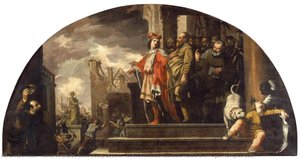
Notable among his retable commissions is the “Saint Wenceslas Orders the Destruction of Pagan Temples,” a powerful depiction of the saint’s triumph over heresy. This work exemplifies Škréta's ability to combine historical narrative with symbolic representation, reflecting the prevailing religious zeal of the era. His portraits also gained considerable renown, showcasing his skill in capturing individual likenesses and conveying personality through subtle gestures and expressions.
Influence and Lasting Significance
Karel Škréta Ze Šotonovský Závořice’s impact on Czech art is undeniable. He is widely considered the founder of Bohemian Baroque painting, establishing a distinct artistic style characterized by dramatic lighting, dynamic compositions, and a deep engagement with religious themes. His innovative approach to printmaking – particularly his design of thesis prints – further solidified his position as a pioneering figure in the field. Škréta’s work continues to be studied and admired for its technical brilliance, emotional depth, and historical significance. His legacy is commemorated through street names across Prague and Brno, ensuring that this remarkable artist remains an integral part of the city's cultural identity.
Further research into Škréta’s life and work can be found in publications such as “Škrétové” by Jaromír Neumann (2000) and the exhibition catalog “Karel Škréta – Paintings Before 1800,” published by the National Gallery Prague in 2010.