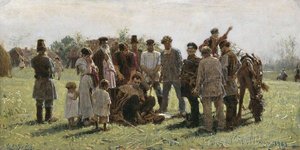
Konstantin Savitsky: A Voice of Rural Russia
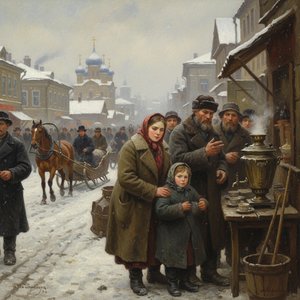
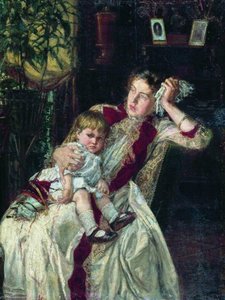
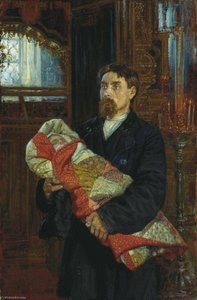
Konstantin Apollonovich Savitsky (1844-1905) stands as a cornerstone figure within the Russian Realist movement, specifically the Peredvizhniki group—a collective of artists who championed depicting everyday life and social realities outside the confines of academic art. His canvases resonate with an unflinching portrayal of peasant existence, imbued with poignant emotion and subtle commentary on societal injustices, cementing his place as one of Russia’s most enduring artistic voices.
- Early Life & Formation: Born in Taganrog, Savitsky's formative years were shaped by a family steeped in intellectual pursuits—his father was a physician, fostering an appreciation for observation and understanding the human condition. Tragedy struck early when both parents succumbed to illness, leaving him under the guardianship of his uncle who resided in Latvia. This relocation propelled him into a private boarding school where he honed his artistic skills before embarking on his journey to Saint Petersburg in 1862.
- Academic Pursuits & Influences: Savitsky’s enrollment at The Imperial Academy of Arts proved pivotal, placing him amongst luminaries like Ilya Repin, Ivan Shishkin, Viktor Vasnetsov, and Mark Antokolski—artists who profoundly impacted his artistic sensibilities. These encounters instilled a deep respect for tradition while simultaneously encouraging exploration beyond established conventions.
The Peredvizhniki Movement & Artistic Style
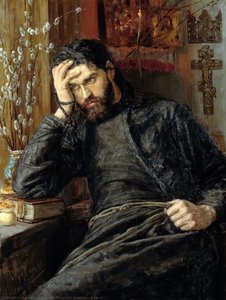
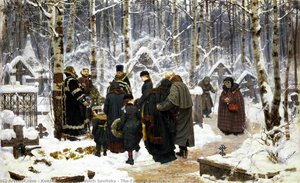
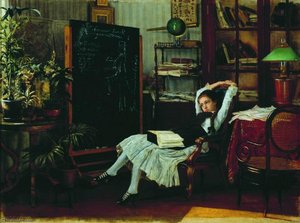
Savitsky’s involvement with the Peredvizhniki movement marked a decisive turning point in his artistic trajectory. Dissatisfied with the rigid formalism of academic painting, he joined forces with fellow artists to establish the Society for Traveling Art Exhibitions in 1870—a bold defiance against official censure and a commitment to portraying Russia’s socio-economic landscape authentically. His style is characterized by meticulous detail combined with expressive brushwork, capturing not merely appearances but also psychological depth. He favored muted palettes reflecting the somber realities of rural life, prioritizing emotional resonance over idealized beauty.
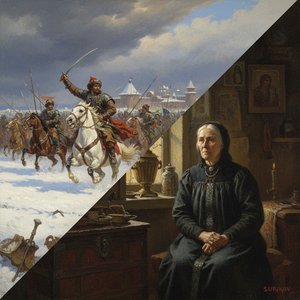
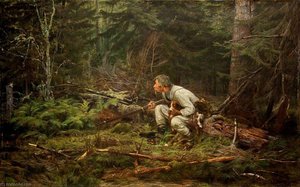
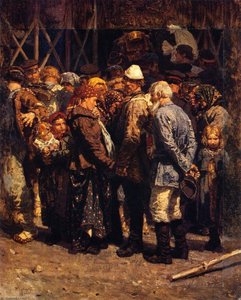
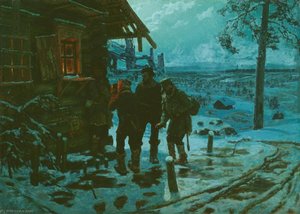
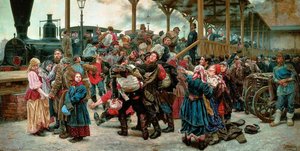
- Notable Paintings & Themes: Savitsky’s oeuvre encompasses a diverse range of subjects—from depictions of peasant labor and hardship (“Repairing the Railroad,” “To War”) to landscapes imbued with spiritual significance (“Morning in a Pine Forest”). The painting "To War," completed over ten years, exemplifies his dedication to conveying profound emotion through monumental scale and masterful technique.
- Collaboration & Attribution Disputes: Savitsky’s partnership with Ivan Shishkin on “Morning in a Pine Forest” yielded a celebrated masterpiece—though the attribution controversy surrounding the painting underscores the complexities of artistic provenance. Savitsky's withdrawal from claiming authorship highlights his unwavering integrity and commitment to artistic truth.
Legacy & Historical Significance
Konstantin Savitsky’s contribution to Russian art transcends mere stylistic innovation; he championed a humanist vision rooted in empathy for the common people. His unflinching portrayal of rural Russia served as a powerful critique of social inequalities and solidified his reputation as one of the foremost Realist painters of his era. Today, Savitsky's works continue to inspire admiration for their artistic merit and serve as poignant reminders of 19th-century Russian society—a testament to an artist who dared to confront reality with unwavering honesty and profound compassion.