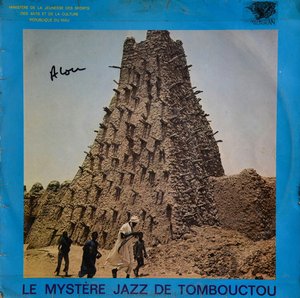
The Enigmatic Sound of Tombouctou: Unveiling Le Mystère Jazz de Tombouctou
Le Mystère Jazz de Tombouctou remains one of the most captivating and elusive figures in the landscape of Malian music. More than a band, it represents a specific moment—a government-sponsored burst of creativity aimed at defining a national sonic identity during the 1970s. The story of Le Mystère Jazz is inextricably linked to Mali’s post-independence ambitions and its desire to cultivate a unique cultural voice on the world stage. Unlike many artists whose biographies are filled with personal anecdotes, details surrounding the formation and members of this orchestra are scarce, adding to their mystique. What *is* known paints a picture of a collective effort born from a deliberate national project.
Inspired by the success of similar initiatives in neighboring Guinea, the Malian government, through its Ministry of Information, partnered with German label Bärenreiter Musicaphon in 1970 to produce a series of vinyl records. The goal was ambitious: to document and promote the diverse musical traditions across Mali’s regions, establishing local orchestras and providing them with resources to record and distribute their work. This wasn't simply about preservation; it was about creation—fostering new sounds that blended traditional rhythms with modern instrumentation, particularly the electric guitar which was rapidly gaining popularity.
A Product of National Ambition
Le Mystère Jazz de Tombouctou emerged from this fertile ground. The orchestra itself wasn’t a long-standing ensemble with a fixed lineup; rather, it appears to have been assembled specifically for the purpose of recording an album under the Mali Kunkan label. This explains the relative lack of biographical information about individual members—they were musicians drawn from various regional groups, brought together for this singular project. The album, released in 1977, is a testament to this collaborative spirit. It’s characterized by extended instrumental passages, hypnotic grooves, and a distinctive use of guitar that weaves intricate melodies around traditional vocal styles.
The music reflects the cultural crossroads of Tombouctou—a historic trading center with deep roots in both Arab and African traditions. While definitively jazz-influenced, it’s not jazz as understood in the Western sense. It's a uniquely Malian interpretation, infused with local scales, rhythms, and instrumentation. The extended song lengths – many exceeding ten minutes – allowed for improvisation and exploration, creating a sound that is both captivatingly hypnotic and deeply rooted in its cultural context.
Rediscovery and Lasting Influence
For decades, the original pressing of Le Mystère Jazz de Tombouctou remained incredibly rare, sought after by collectors specializing in African music. Its rediscovery in recent years has been nothing short of a revelation. Reissues by labels like Kindred Spirits have brought this forgotten gem to a wider audience, introducing a new generation to its captivating sound.
The album’s influence can be heard in the work of contemporary Malian artists who are exploring similar territory—blending traditional sounds with modern instrumentation and pushing the boundaries of genre. It serves as a powerful reminder of the creative energy that flourished during this period, fueled by government support and a collective desire to define a national musical identity. The music is not merely a historical artifact; it’s a living testament to the power of collaboration, cultural exchange, and the enduring legacy of Mali's golden age of vinyl.
The Sound of a Renaissance
Le Mystère Jazz de Tombouctou exists within a broader context of government-funded musical projects in Mali during the 1970s. Albums by other regional orchestras—such as L’Orchestre National Badéma and L'Ensemble Instrumental National du Mali—were also released under the Mali Kunkan label, each showcasing the unique sounds of their respective regions. These recordings collectively represent a remarkable period of artistic innovation and cultural preservation.
The significance of these albums extends beyond their musical merit. They played a crucial role in establishing Mali’s reputation as a vibrant center for African music, fostering a sense of national pride and identity. While the government funding eventually ceased, the legacy of this era continues to inspire musicians today. Le Mystère Jazz de Tombouctou, with its enigmatic sound and captivating grooves, remains a powerful symbol of that renaissance—a testament to the enduring power of music to transcend boundaries and connect cultures.