The Master of Molten Light: The Life and Legacy of Lino Tagliapietra
In the heart of the Venetian Lagoon, where the shimmering waters of Murano reflect a history of unparalleled craftsmanship, Lino Tagliapietra was born into a world defined by fire and silica. Born in 1934, his journey began not in an art academy, but in the heat of the furnace. At the tender age of twelve, he entered the rigorous tradition of apprenticeship, serving under the legendary maestro Archimede Seguso. This early immersion in the grueling, disciplined life of a glassblower allowed him to develop an intimate, almost instinctive relationship with molten glass. By twenty-five, he had ascended to the prestigious rank of maestro, a feat that signaled the arrival of a virtuoso capable of commanding the most temperamental of mediums.
Tagliamentra’s artistry is far more than a mere continuation of ancient Venetian traditions; it is a profound dialogue between heritage and modernity. While his foundations are rooted in the centuries-old techniques of Murano, his vision has always been expansive. He possesses a rare ability to bridge the gap between the historical weight of Italian glassmaking and the experimental spirit of the American studio glass movement. Through his work at institutions like the Pilchuck Glass School in Washington State, he became a vital conduit for international exchange, bringing the sophisticated, refined methods of Italy to the more sculptural, experimental landscapes of the United States, and extending that influence as far as Japan, China, and Australia.
A Symphony of Color and Form
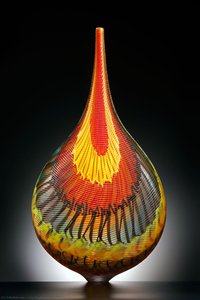
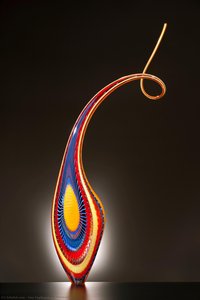
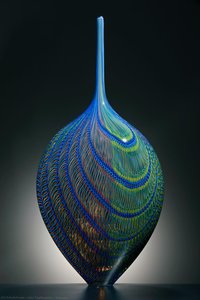
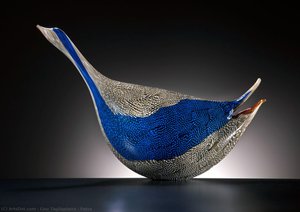
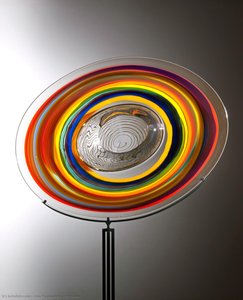
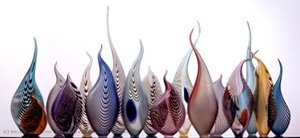
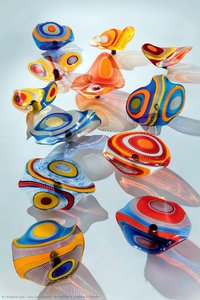
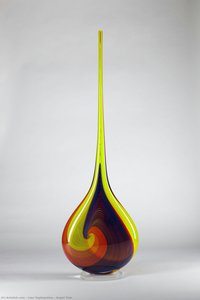
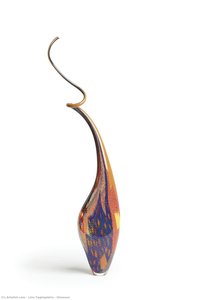
To observe a Tagliapietra sculpture is to witness a mesmerizing dance of light and pattern. His aesthetic often evokes the rhythmic illusions of Op Art, utilizing repetition and intricate layering to create works that seem to shift and breathe as the viewer moves around them. He is renowned for his meticulous development of bespoke color palettes, refusing to rely on standard hues; instead, he crafts singular chromatic experiences that lend his pieces an unparalleled intensity. This dedication to color is often paired with sophisticated techniques such as Vetro Murrino, where small, multicolored mosaic tesserae are fused together to create a vivid, swirling melange of light.
His subject matter frequently draws inspiration from the fluid, organic world surrounding his Venetian roots. Many of his most celebrated works explore themes of aquatic life and natural evolution:
- The Prehistoric Series: Sculptures like his iconic Dinosaur utilize the strength of prehistoric forms combined with the fluidity of water, symbolizing the malleability of nature.
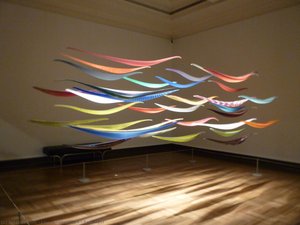
- Aquatic Inspiration: His designs often mirror the movement of creatures found in the Venetian lagoon, blending the perceived power of larger animals with the delicate grace of fish.
- Abstract Geometry: Beyond representational forms, his work delves into pure abstraction, where the interplay of light through glass creates a sense of infinite depth and structural complexity.
A Lasting Impact on Contemporary Glass
The historical significance of Lino Tagliapietra lies in his role as a global educator and a transformative force in contemporary sculpture. He did not merely master a craft; he redefined its boundaries. By integrating the precision of Murano’s decorative traditions with the expressive, sculptural freedom of modern art, he helped elevate glass from a functional medium to a high-art form capable of profound emotional resonance. His influence is felt in every studio that seeks to balance technical perfection with avant-garde experimentation.
Today, as he continues to reside between the historic workshops of Murano and the innovative hubs of Seattle, Tagliapietra remains an active force in the art world. His legacy is etched into the very glass he shapes—a testament to a life spent mastering the delicate balance between the fragility of the medium and the enduring strength of artistic vision. Through his teaching and his breathtaking creations, the flame of Venetian mastery continues to burn brightly, illuminating the global stage for generations of artists yet to come.