Maragarida Yolanda Botelho de Macedo Tamegão: A Visionary Watercolorist of Portugal
Maragarida Yolanda Botelho de Macedo Tamegão, affectionately known as Margarida Tamegão, was a Portuguese painter and watercolorist whose artistic journey spanned decades and encompassed profound engagement with European landscapes and the vibrant spirit of Azorean art. Born in Portugal in 1901, her life’s dedication to capturing beauty on paper cemented her place as one of Portugal's most respected watercolor artists.
- Early Influences & Artistic Training:
- Travels Across Europe: Observation and Inspiration
- The Gávea Movement: Embracing Modern Expressionism
- Signature Style: Still Life Explorations with Symbolism
- Legacy & Recognition: A Continuing Appreciation for Tamegão’s Art
Early Influences & Artistic Training
Tamegão's artistic inclinations blossomed early, nurtured by a formative encounter with Spanish painter Xavier Jiménez at the age of thirteen. Jiménez recognized her innate talent and guided her initial explorations into painting techniques, establishing a foundation for her future endeavors. Subsequently, she honed her skills under the tutelage of Portuguese artists Fernando Galhano and Abel Santos, absorbing diverse artistic perspectives and mastering various mediums. These formative experiences instilled in her a deep understanding of artistic principles and fueled her lifelong passion for visual art.
Travels Across Europe: Observation and Inspiration
Driven by an unwavering desire to expand her artistic horizons, Tamegão embarked on extensive journeys throughout Europe during the 1930s and 40s. These expeditions served as invaluable sources of inspiration, allowing her to immerse herself in unfamiliar landscapes and cultures. She meticulously documented her observations through sketching and painting, capturing the essence of each location with remarkable accuracy and sensitivity. The diverse vistas she encountered – from the rolling hills of Tuscany to the dramatic fjords of Norway – profoundly impacted her artistic vision, informing her compositions and palettes.
The Gávea Movement: Embracing Modern Expressionism
In the late 1960s, Tamegão became a prominent figure within Portugal’s burgeoning Gávea movement—a collective of artists who championed expressionist aesthetics and sought to convey emotion through bold colors and gestural brushstrokes. This artistic alliance fostered experimentation and encouraged artists to challenge conventional norms, pushing the boundaries of Portuguese art. The movement's ethos resonated deeply with Tamegão’s sensibilities, propelling her towards a more dynamic and emotionally resonant style.
Signature Style: Still Life Explorations with Symbolism
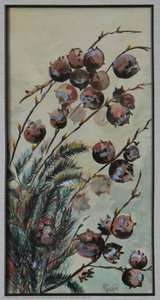
Tamegão distinguished herself through her masterful execution of still life paintings—a genre she embraced wholeheartedly throughout her career. Her canvases frequently depicted autumnal branches adorned with oak galls, meticulously rendered in watercolor hues that conveyed not merely visual beauty but also profound symbolic meaning. Each brushstroke carried a deliberate intention, reflecting Tamegão’s belief that art could communicate deeper truths about the natural world and human experience. The careful layering of colors and textures created an atmosphere of contemplative serenity, inviting viewers to contemplate the passage of time and the enduring power of nature.
Legacy & Recognition: A Continuing Appreciation for Tamegão’s Art
Today, Margarida Tamegão's artwork commands admiration from art historians and collectors alike. Her paintings are housed in prestigious institutions across Portugal and internationally, testament to the enduring quality of her artistic vision. Critics have lauded her ability to distill complex emotions into simple forms—a hallmark of her distinctive style—and celebrated her unwavering commitment to watercolor as a medium for conveying beauty and contemplation. Tamegão’s legacy continues to inspire aspiring artists and serves as a reminder that true artistry lies in capturing the essence of life's moments with grace and sensitivity.