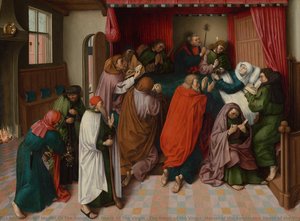
the master of the almshouse of the seven electors, also known as the master of the amsterdam death of the virgin, was a netherlandish painter who flourished around 1500. his name is derived from a panel depiction of the death of the virgin, dated to about 1500 and now in the rijksmuseum amsterdam. the painting shows the virgin mary and the twelve apostles in a complex interior, in intimate mood.
artistic style and symbolism
the figures in the painting are small, with small heads and hands; their torsos, however, are bulky and covered in drapery. this unique style is characteristic of the master of the almshouse of the seven electors. the name "master of the almshouse of the seven electors" is sometimes preferred because it refers to the name of the institution that donated the painting to the museum. key aspects of his work include:- the use of small figures with bulky torsos and drapery
- the depiction of complex interiors and intimate moods
- the emphasis on symbolism, such as the lighted candle in the death of the virgin