The Enigmatic Master of Saint Catherine
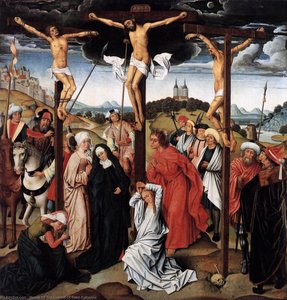
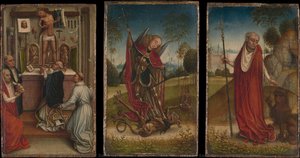
The identity of the “Master of the Legend of Saint Catherine” remains one of the most enduring mysteries in Early Netherlandish painting, a puzzle that has captivated scholars for over a century. Known primarily for his breathtaking depictions of saints—particularly Saint Michael, The Mass of Saint Gregory and Saint Jerome—this artist’s oeuvre consists of just three monumental panels commissioned for Cologne Charterhouse Monastery around 1486, cementing his place as a pivotal figure in the artistic landscape of fifteenth-century Germany. Despite extensive research and meticulous stylistic analysis, definitive attribution has proven elusive, fueling speculation about potential connections to luminaries like Jan van Eyck and Hans Memling—artists whose reputations were similarly shrouded in obscurity during their lifetimes.
- Early Life & Artistic Training: Precise biographical details are scarce. Evidence suggests he was born around 1460-1470, likely in Brussels, where the artistic milieu fostered innovation and experimentation. His training undoubtedly involved immersion in the workshops of Rogier van der Weyden and Jean Clouet, masters renowned for their masterful realism and expressive symbolism—influences that would profoundly shape his distinctive visual language.
- Stylistic Characteristics: The Master’s style is characterized by a remarkable fusion of Byzantine iconography and Northern European artistic conventions. His compositions are imbued with solemn grandeur, reflecting the spiritual fervor of the era, yet rendered with astonishing detail—a hallmark of Flemish painting. Notably, he employs a technique known as *grisaille*, utilizing monochrome pigments to achieve subtle tonal gradations that heighten the emotional impact of his figures. This masterful manipulation of light and shadow distinguishes him from many of his contemporaries.
The Cologne Panels: A Testament to Faith & Artistic Vision
The three panels depicting scenes from Saint Catherine’s Legend—Saint Michael, The Mass of Saint Gregory and Saint Jerome—represent the pinnacle of the Master's artistic achievement. These monumental works are housed in the Royal Museums of Fine Arts of Belgium and the Metropolitan Museum of Art respectively, and they stand as unparalleled examples of Byzantine-inspired religious art. Each panel showcases a profound understanding of theological concepts and visual storytelling, conveying narratives of divine grace and spiritual contemplation with breathtaking precision. The meticulous rendering of drapery folds, facial expressions, and anatomical detail demonstrates an extraordinary command of artistic technique—a testament to the artist’s dedication to capturing the essence of Christian piety.
- Saint Michael: This panel portrays Saint Michael triumphantly vanquishing Lucifer, symbolizing the victory of good over evil. The depiction is imbued with dynamism and dramatic tension, reflecting the fervor of medieval theology.
- The Mass of Saint Gregory: Reverently rendered, this scene depicts Saint Gregory presiding over the Eucharist—a central sacrament in Christian worship. The artist’s masterful use of *grisaille* creates a luminous atmosphere that underscores the solemnity of the occasion.
- Saint Jerome: Saint Jerome, depicted in contemplative repose, embodies ascetic piety and intellectual devotion. His serene countenance conveys an inner peace—a reflection of his unwavering faith.
Influence & Legacy
Despite the lack of definitive biographical information, the Master’s influence extends far beyond Cologne Charterhouse. Stylistic parallels have been observed in paintings attributed to Hans Memling and Pieter Bruegel the Elder—suggesting a broader dissemination of his artistic ideas throughout Northern Europe. Furthermore, scholars contend that he may represent a crucial link between Byzantine iconography and Flemish realism—bridging the gap between Eastern spiritual tradition and Western artistic innovation. His enduring legacy resides not only in the beauty of his paintings but also in their profound theological depth—a testament to the artist’s ability to translate complex religious concepts into compelling visual narratives.
Ongoing Debate & Future Research
The attribution debate surrounding the Master of Saint Catherine continues to stimulate scholarly discussion. Recent investigations utilizing advanced imaging techniques have yielded tantalizing clues about potential connections to Pieter van der Weyden—a hypothesis supported by stylistic similarities and compositional parallels. Continued research into archival documents and comparative analyses of artistic styles promise to illuminate new facets of this enigmatic artist’s life and work—further enriching our understanding of fifteenth-century art history and bolstering the enduring fascination with this elusive figure.