The Veiled Hand of the Netherlandish Master
In the twilight of the fifteenth century, amidst the bustling trade routes and burgeoning artistic fervor of the Southern Netherlands, an artist emerged whose name has been lost to the corridors of time, yet whose vision remains strikingly luminous. Known only as the Master of the Prado — Adoration of the Magi, this anonymous painter operated between approximately 1475 and 1500, leaving behind a legacy etched in vibrant pigments and profound devotion. While his personal identity remains shrouded in mystery, his presence is felt through the meticulous craftsmanship that defines the Early Netherlandish tradition. His work serves as a window into an era where the spiritual and the material were intricately woven together, capturing the sacred infancy of Christ with a clarity that transcends the centuries.A Symphony of Color and Sacred Detail
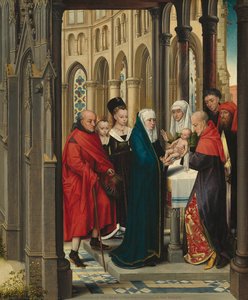
The artistry of this master is characterized by a breathtaking use of color and an almost obsessive attention to detail, qualities that were highly prized by the collectors of his age. His panels are not merely religious icons but immersive narratives that invite the viewer into the very heart of biblical events. In masterpieces such as the Adoration of the Magi and the Presentation in the Temple, one observes a mastery of light and texture that breathes life into every fold of fabric and every glint of gold.His technique reflects the profound influence of the Netherlandish school, where the pursuit of realism was matched only by the desire to evoke divine awe. The artist’s ability to render the tender moments of Christ's early life—the soft glow of skin, the intricate patterns of regal attire, and the atmospheric depth of the landscapes—demonstrates a sophisticated command over his medium. This dedication to detail allowed him to create scenes that were both deeply personal in their intimacy and grand in their theological significance.