Early Life and Influences
Mmakgabo Mmapula Mmangankato Helen Sebidi (born 5 March 1943) is a South African artist born in Marapyane, outside Hammanskraal, Pretoria, who lives and works in Johannesburg. Her artistic journey began under the nurturing influence of her grandmother, whose traditional crafts—murals, knitting, sewing, embroidery, and calabash decoration—shaped Sebidi’s formative years. The name “Mmakgabo,” meaning “keeper of the flame,” embodies her grandmother's unwavering dedication to vocational labor and a belief in preserving cultural heritage. Sebidi’s mother worked as a domestic worker in Johannesburg, providing Helen with a grounding in urban life alongside her rural upbringing—a duality that would profoundly inform her artistic vision. From a young age, Sebidi demonstrated an innate talent for visual expression, honing her skills through self-directed study and experimentation. Notably, she encountered Jonathan Koenakeefe Mohl at Dorkay House, where he served as her mentor, guiding her initial explorations into drawing techniques—moving from botanical studies to landscapes and architectural representations. This early mentorship established a cornerstone of Sebidi’s artistic development.- Sebidi's grandmother instilled in her the importance of storytelling and observation – skills that would later translate into her distinctive artistic style.
- Her mother’s experience as a domestic worker exposed Sebidi to the realities of working-class life, shaping her empathetic understanding of human experience.
Artistic Style and Technique
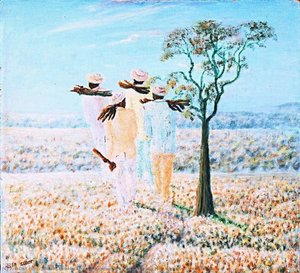
Sebidi's artistic style is characterized by a bold embrace of abstraction and vibrant color palettes—a hallmark of African modernist painting and sculpture. She eschews representational accuracy in favor of conveying emotion and capturing the essence of her subjects, often depicting stylized portraits that blend realism with expressive brushstrokes. Sebidi’s distinctive approach stems from her meticulous attention to detail and her masterful manipulation of materials, particularly clay – a medium she utilizes to create striking sculptures that resonate with spiritual symbolism.- Sebidi's use of color—often brilliant hues against muted backgrounds—creates visual impact and communicates mood effectively.
- Her sculptural technique involves layering clay meticulously, resulting in textured surfaces that evoke organic forms and convey narratives rooted in African traditions.
Recognition and Awards
Sebidi’s artistic achievements have garnered international acclaim and cemented her place as a pivotal figure in contemporary South African art.In 1989, she received the Standard Bank Young Artist Award, marking her debut on the national stage and establishing her as the first black woman to honorably accept this prestigious accolade. This recognition propelled Sebidi into the spotlight, fostering connections with influential arts organizations and artists like Bill Ainslie and David Koloane.- The award acknowledged Sebidi’s burgeoning talent and validated her commitment to artistic exploration.
National Honors and Legacy
Sebidi's contributions to the art world have been formally recognized by South Africa’s highest honors.In 2004, President Thabo Mbeki bestowed upon her the Order of Ikhamanga in Silver—a testament to Sebidi’s unwavering dedication to artistic excellence and her embodiment of national values. This honor underscored her significance as a cultural icon and symbolized her enduring influence on South African society.- The Order of Ikhamanga is awarded to individuals who have made exceptional contributions to the advancement of South Africa, solidifying Sebidi’s legacy as a champion of artistic innovation and cultural preservation.
Notable Works and Exhibitions
Sebidi's oeuvre encompasses both paintings and sculptures—each piece imbued with profound symbolism and reflecting her deep connection to African heritage.Her seminal work,"Tears of Africa"(1988) exemplifies her artistic vision—a poignant portrayal of human suffering rendered in vibrant colors that simultaneously convey sorrow and resilience. Sebidi’s artworks have been showcased in prominent institutions worldwide, including the National Museum of Women in the Arts (Washington), New York; The Smithsonian National Museum of African Art (New York); and The World Bank.- Her exhibitions demonstrate her ability to engage audiences emotionally while conveying complex narratives about identity and experience.
Continuing Artistic Practice
As of September 2018, Sebidi’s artistic journey culminated in a solo presentation at the Norval Foundation in Cape Town—a retrospective entitled “Batlhaping Ba Re”—celebrating her lifetime achievements and reaffirming her enduring commitment to artistic expression.- Her ongoing work continues to explore themes of lineage, spirituality, and social commentary—solidifying Sebidi’s position as a visionary artist who transcends boundaries and inspires generations.