Nicolaes van Veerendael (1626 – 1691): The Monkey Painter and Symbolist Elegance
Nicolaes van Veerendael, born in Antwerp around 1640, stands as a singular figure within the Dutch Golden Age artistic landscape. Though his life remains shrouded in relative obscurity compared to contemporaries like Rembrandt or Vermeer, his contribution to Flemish painting—particularly his masterful depictions of flowers and fruit—continues to captivate art historians and collectors alike. He was apprenticed to Willem van Veerendael, his father, who himself practiced as a painter, establishing a lineage steeped in artistic tradition.
Veerendael’s distinctive style quickly gained recognition for its meticulous attention to detail and its incorporation of symbolic elements—most notably, the recurring motif of monkeys. These primates weren't merely decorative additions; they served as potent emblems representing folly, deception, and the fleeting nature of earthly pleasures – a concept deeply rooted in Renaissance humanist thought.
- Early Influences: Veerendael’s formative years coincided with the flourishing Baroque movement, absorbing influences from artists like Rubens and Caravaggio. These masters championed dramatic lighting and emotive expression, shaping Veerendael's artistic sensibilities.
- Guild Membership & Artistic Development: By 1657, Veerendael achieved guild membership in Antwerp’s St Luke Guild, signifying his professional standing and marking a crucial stage in his artistic maturation. This affiliation provided access to resources and fostered collaboration with fellow artists.
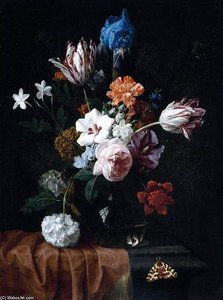
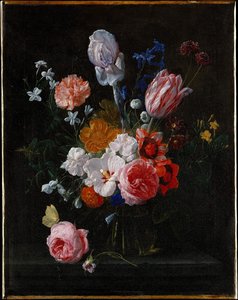
His oeuvre comprises approximately eighty paintings, predominantly still lifes featuring flowers, fruits, and occasionally insects—often arranged within ornate glass vases or bowls. These compositions are characterized by a remarkable luminosity achieved through masterful glazing techniques, capturing the subtle nuances of color and texture with breathtaking accuracy. Veerendael’s meticulous observation of nature combined with his deliberate use of symbolism elevated his work beyond mere representation; it conveyed profound philosophical ideas about mortality and beauty.
- Notable Works: Among his celebrated paintings are ‘A Bouquet of Flowers,’ executed in 1662, showcasing a breathtaking display of floral artistry. Similarly, ‘Flower Still-Life’ from 1675 exemplifies the Baroque aesthetic with its dramatic chiaroscuro and opulent presentation.
Nicolaes van Veerendael's legacy resides not only in his artistic achievements but also in his contribution to the intellectual discourse of his time. He embodies the humanist spirit of the Golden Age, reflecting upon universal themes—life, death, and the pursuit of virtue—through a lens of exquisite visual beauty. His paintings continue to inspire admiration for their technical brilliance and their enduring symbolic resonance.