Nicos Hadjikyriakos-Ghikas: A Pioneer of Geometric Abstraction in Greek Landscape Art
Nicos Hadjikyriakos-Ghikas (February 26, 1906 – September 3, 1994) stands as a singular figure in twentieth-century Greek art, recognized primarily for his groundbreaking contribution to geometric abstraction and his profound engagement with the landscapes of Greece. Born in Hydra Island, Peloponnese, Ghika’s artistic journey began amidst the vibrant cultural milieu of Hydra’s bohemian community—a formative experience that would profoundly shape his aesthetic sensibilities and artistic vision. He pursued formal studies at the Athens School of Fine Arts, honing his skills under influential teachers who instilled in him a dedication to classical principles alongside an openness to modernist experimentation.
- Early Influences: Ghika’s initial artistic explorations were marked by Impressionistic tendencies, reflecting the prevailing stylistic currents of his time. However, he swiftly transitioned towards Cubism and Futurism, absorbing the revolutionary ideas championed by Picasso and Boccioni respectively. These influences fueled his desire to depict reality not as it appears visually but as it is conceptually understood—a pivotal shift toward abstraction.
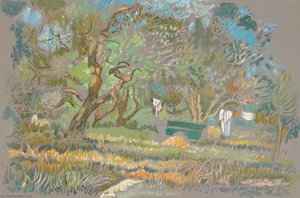
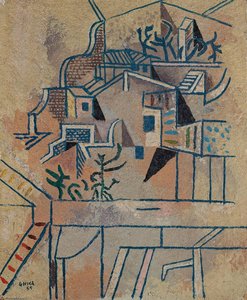
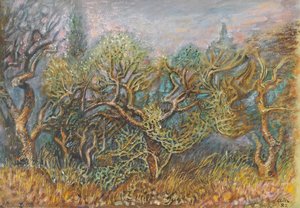
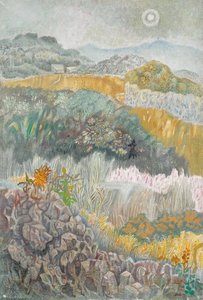
- Hydra Island: Hydra became Ghika’s lifelong home and artistic sanctuary. The island's rugged terrain, crystalline waters, and ancient olive groves served as constant inspiration for his paintings. He meticulously documented these landscapes through a distinctive visual language characterized by simplified forms, bold colors, and geometric patterns—a stylistic hallmark that distinguishes him from many of his contemporaries.
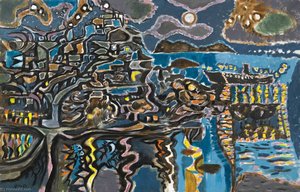
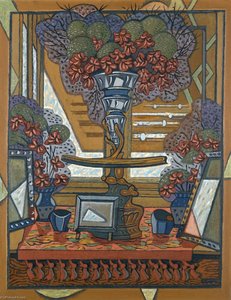
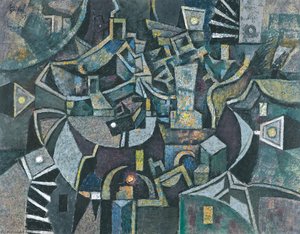
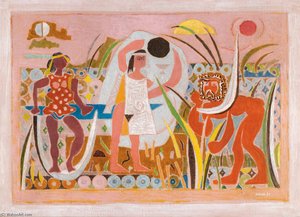
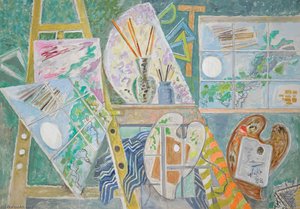
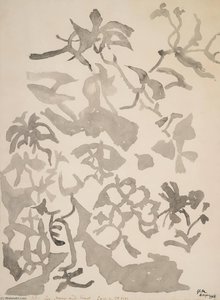
Ghika’s artistic output spanned decades, producing over 800 paintings, sculptures, and drawings. His oeuvre encompasses a remarkable range of subjects—portraits, landscapes, still lifes—yet it is his depictions of Greek nature that resonate most powerfully with viewers. He achieved particular renown for his series of paintings portraying Hydra Island, capturing its essence through meticulously crafted compositions that prioritized clarity and geometric precision. These works exemplify Ghika’s unwavering commitment to conveying emotion and atmosphere not through representational accuracy but through the expressive manipulation of color and form—a technique rooted in both Cubist and Expressionist traditions.
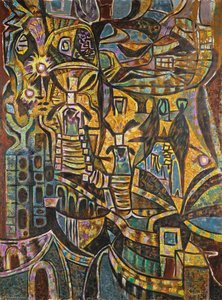
- Key Characteristics: Ghika's paintings are distinguished by several key features, including a deliberate reduction of visual elements to their essential geometric components; an emphasis on orthogonal lines and planar surfaces; and the use of vibrant hues that convey psychological depth alongside aesthetic beauty. He eschewed illusionistic perspective, opting instead for a flattened space that invites contemplation and encourages viewers to engage with the artwork’s underlying conceptual framework.
- Recognition & Legacy: Ghika's artistic achievements garnered international acclaim during his lifetime. His paintings were exhibited extensively throughout Europe and America, cementing his reputation as one of Greece’s foremost modernist artists. Today, Ghika’s work continues to inspire admiration for its uncompromising aesthetic integrity and its profound connection to the spirit of Greek landscape art—a testament to his enduring influence on subsequent generations of painters.
Ghika's contribution extends beyond mere stylistic innovation; he championed a humanist vision rooted in intellectual rigor and artistic sensitivity. He believed that art should serve as a conduit for conveying human experience, fostering dialogue between the artist and the viewer, and ultimately enriching our understanding of the world around us. His legacy resides not only in his stunning visual creations but also in his unwavering conviction that art possesses the power to illuminate the complexities of existence—a sentiment that remains remarkably pertinent in contemporary artistic discourse.