The Sharp Eye of Milan: The Life and Legacy of Ottavio Cima
In the bustling, culturally vibrant streets of turn-of-the-century Milan, a unique artistic voice emerged to capture the very soul of an era. Ottavio Cima (1874–1943) was not merely an observer of his time; he was its most perceptive satirist. Born in the heart of Milan, Cima’s identity was inextricably linked to the city's rapid transformation and social complexity. His work serves as a visual chronicle of a period defined by both industrial progress and deep-seated societal contradictions. Through his masterful use of line and shadow, he transformed the ephemeral moments of Milanese life into enduring historical commentary.
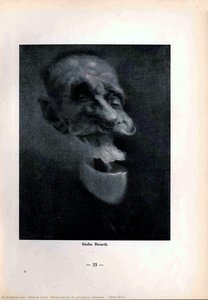
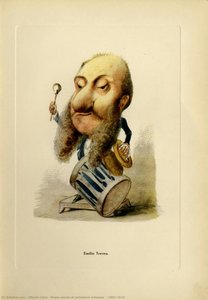
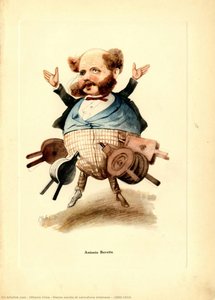
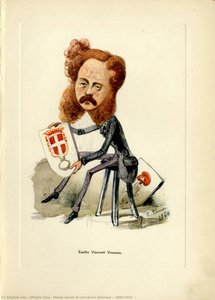
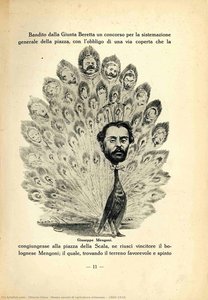
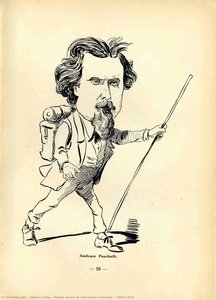
Cima’s artistic journey was deeply rooted in the prevailing aesthetic currents of his youth, particularly the movements of Realism and Impressionism. While these styles often sought to capture light and atmosphere, Cima adapted their principles to serve a more biting, analytical purpose. He possessed an uncanny ability to distill the essence of a subject—be it a powerful politician or a local tradesman—into a single, expressive caricature. His technique was far more sophisticated than simple mockery; he employed a disciplined command of tonal gradation, utilizing intricate hatching and cross-hatching to breathe life, texture, and weight into his sketches. This meticulous approach allowed him to convey not just the physical likeness of his subjects, but their underlying emotional states and moral complexities.
A Master of Satire and Social Commentary
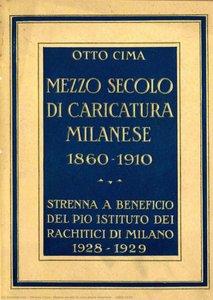
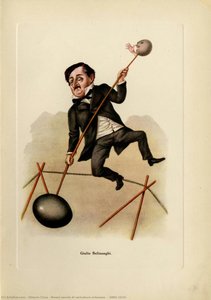
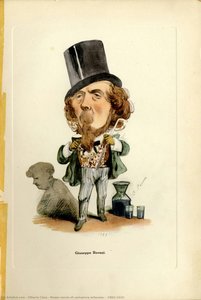
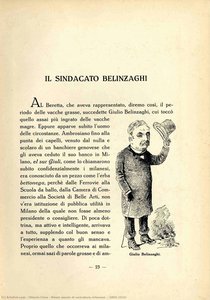
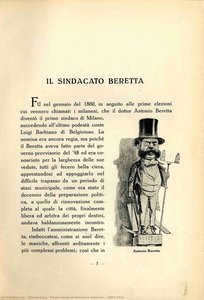
The pinnacle of Cima’s professional achievement lies in his monumental project, Mezzo Secolo di Caricatura Milanese (1860-1910). This ambitious undertaking was much more than a collection of drawings; it was a profound sociological study of fifty years of Milanese history. In this work, Cima acted as both historian and critic, using his pen to dissect the influential figures of the day—industrialists, artists, and politicians alike. His ability to expose hypocrisy through subtle facial distortions and sharp, decisive lines cemented his reputation as a master of the genre.
Beyond the biting wit found in his caricatures, Cima possessed a lyrical sensibility that revealed a softer side to his artistic temperament. This versatility is perhaps best seen in his literary and descriptive endeavors, such as Fra il verde dei giardini milanesi. In this work, the sharp-edged satirist gave way to a poet of the landscape, reflecting on the serene beauty of Milan’s gardens and the quiet rhythms of their inhabitants. This duality—the ability to pivot from the caustic critique of a public official to the tender observation of a blooming garden—is what makes his body of work so uniquely human.
The historical significance of Ottavio Cima extends far beyond the borders of Italy. He remains a vital figure for anyone seeking to understand the cultural pulse of Milan during a transformative epoch. His legacy is found in:
- The Documentation of Social Change: Providing an unfiltered look at the shifting power structures and social hierarchies of late 19th and early 20th-century Italy.
- Technical Mastery of Illustration: Advancing the use of line work as a tool for both high art and mass communication through sophisticated shading techniques.
- Cultural Preservation: Preserving the wit, humor, and spirit of a vanished Milanese era that might otherwise have been lost to the passage of time.