A Legacy of Drama and Color: The Life of Paul Cronin
The story of Paul Cronin is one where the boundaries between the dramatic arts and visual expression blur into a singular, vibrant tapestry. Born on July 8, 1938, in the quiet farming community of Jamestown, South Australia, Cronin’s early life was rooted in the rugged, honest rhythms of the land. This connection to the Australian landscape would later serve as a silent foundation for his artistic sensibilities. Before he became a household name through the flickering light of the television screen, he was an athlete of remarkable discipline, excelling in gymnastics and representing his country in the 1958 Commonwealth Games as part of the four x 100m relay team. This physical precision and dedication to form would eventually find a new outlet in the sweeping strokes of his mural work.
As he transitioned from the rural landscapes of his youth to the bustling energy of Melbourne, Cronin’s life took a cinematic turn. He moved through various roles—from truck driver to draftsman—before finding his true calling in the intense, character-driven world of Crawford Productions. It was here that he began to master the art of persona, portraying figures that resonated deeply with the Australian public. His presence on screen was marked by an ability to embody both authority and a profound, quiet compassion, a duality that would define much of his professional identity.
From the Silver Screen to the Painted Wall
Cronin’s ascent in the world of television is nothing short of legendary. He became one of Australia’s most decorated actors, earning the prestigious Silver Logie Award for Best Actor five times. His performances in iconic series such as Division 4 and Homicide established him as a pillar of Australian drama, but it was his role as Senior Constable Gary Hogan in Matlock Police and its spin-off, Solo One, that truly captured the national imagination. In these roles, he navigated the moral complexities of justice and community, bringing a sense of grounded realism to the screen that felt intimately connected to the Australian experience.
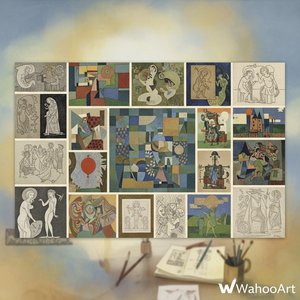
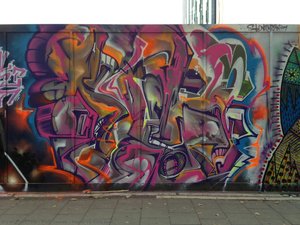
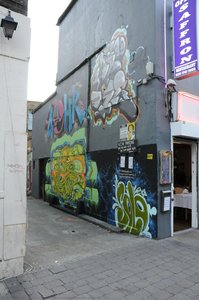
Yet, beyond the accolades of the acting world, there existed a parallel passion for visual storytelling. The same eye for composition and narrative that allowed him to command a television set translated seamlessly into his work as a muralist. His murals often reflect the vibrant, sun-drenched essence of Queensland landscapes, much like the picturesque setting of Emerald that served as the backdrop for Solo One. In these large-scale works, one can sense the influence of his early life—a deep respect for the terrain and an ability to capture the soul of a place through bold color and evocative imagery.
An Enduring Cultural Impression
The significance of Paul Cronin lies in his unique ability to inhabit multiple creative dimensions. He did not merely move from acting to painting; rather, he carried the narrative weight of his characters into the very pigment of his murals. His life was a testament to the idea that an artist’s true medium is storytelling itself, whether through the dialogue of a script or the texture of a wall.
Reflecting on his immense contributions, several key milestones stand out:
- Cinematic Excellence: Achieving the status of Australia's most decorated actor with five Silver Logie Awards.
- Cultural Iconography: Defining an era of Australian television through beloved roles in Matlock Police and Solo One.
- Visual Artistry: Leaving a lasting mark on the landscape through prolific mural commissions that celebrate regional beauty.
- Athletic Discipline: Bringing the precision of a Commonwealth Games athlete to the disciplined execution of his visual works.
Though he passed away in 2019, the dual legacy of Paul Cronin remains etched in the cultural memory of Australia. He remains a figure who bridged the gap between the ephemeral magic of television and the permanent, tactile beauty of mural art, reminding us that the most profound artists are those who can find the extraordinary within the ordinary landscapes of life.