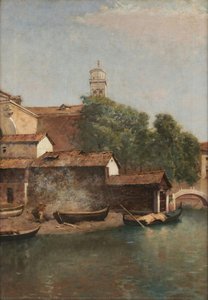
The Visionary of the Tolosan Landscape
Pedro Alejandrino Irureta y Artola (1854–1912) remains a pivotal figure in the history of Spanish landscape painting, serving as a profound voice for the Tolosan School. Born in the picturesque town of Tolosa, Gipuzkoa, his artistic identity was forged at the intersection of Spanish tradition and European innovation. His early journey took him from the formal academic training of Madrid to the prestigious Accademia di Belle Arti di Firenze. This transition to Italy proved transformative; it was here that he encountered the nuances of Italian Impressionism, which fundamentally altered his approach to the canvas. Rather than adhering to rigid academic structures, Irureta began to embrace the techniques of plein air painting, seeking to capture the ephemeral dance of light and the shifting atmospheres that define the natural world.
The evolution of his style was deeply rooted in the burgeoning Romantic movement of his formative years. Drawing inspiration from masters such as Gustave Courbet, Irureta moved away from idealized, staged scenery toward an honest, visceral portrayal of nature. This commitment to realism allowed him to become a leading advocate for the Tolosan School alongside contemporaries like Ignacio Bilbao and José María Ribalta. Together, this collective sought to convey the emotional resonance of the Basque Country through meticulous observation and tonal harmony, turning the rugged landscapes of their homeland into profound psychological studies of light and earth.
Mastery of Light and Atmosphere
Irureta’s technical prowess is most evident in his ability to manipulate oil paint to achieve a luminous, almost breathing quality. He utilized a sophisticated method of layering thin glazes, creating subtle gradations of color that could evoke everything from the heavy mist of a river valley to the bright, sun-drenched canals of Venice. While much of his work is celebrated for its connection to the Basque terrain, his time in Italy introduced him to new motifs. His depictions of Venice often reflect the influence of Martín Rico, characterized by precise brushstrokes and vibrant, colorful landscapes that capture the city's unique luminosity.
However, as his career matured, a more contemplative and subdued side emerged in his work. This is perhaps best exemplified in his celebrated masterpiece, “San Trovaso River” (1906). In this monumental composition, the artist moves away from bright palettes toward a much more vaporous construction. Using a muted spectrum of browns, greens, and blues, he captures the heavy volume of the San Trovaso church and tower, set against the industrial textures of a shipyard. This work serves as a testament to his ability to find grandeur in the quiet, atmospheric corners of the world, blending the structural reality of man-made objects with the soft, enveloping presence of nature.
Legacy and Historical Significance
The historical significance of Pedro Alejandrino Irureta y Artola lies in his role as a bridge between traditional Spanish realism and the modern European fascination with light. His work does not merely document landscapes; it interprets them through an emotional lens, making the geological formations and atmospheric shifts of the Basque and Italian landscapes feel deeply personal. Through his dedication to the Tolosan School, he helped establish a regional aesthetic that prioritized truth over artifice.
Today, his contributions are recognized for several key elements:
- The Integration of Styles: His unique ability to blend Spanish realism with Italian Impressionist light.
- Advocacy for Regionalism: His role in elevating the Tolosan School to a position of artistic importance within Spain.
- Technical Innovation: The masterful use of glazing techniques to capture the fleeting, atmospheric qualities of the natural environment.