The Sculptural Soul of Peter Douglas Stephenson
Born in the quiet Australian town of Ormond in 1943, Peter Douglas Stephenson has emerged as a profound voice in contemporary art, weaving a narrative of human vulnerability through both bronze and pigment. His artistic journey is one defined by a dual heritage, shaped significantly by his formative years at the Tasmanian School of Art between 1971 and 1974, and later refined by the rigorous academic atmosphere of the Staatliche Hochschule für Bildende Kunst in Hamburg, Germany. This intersection of Australian sensibility and European discipline allowed Stephenson to develop a style that is as much about the raw, tactile reality of material as it is about the ethereal complexities of the human psyche.
The essence of Stephenson’s work lies in his ability to translate psychological weight into physical form. His aesthetic was deeply informed by the tremors of European Expressionism, drawing inspiration from the emotive distortions found in the works of Ernst Ludwig Kirchner and Emil Nolde. Rather than seeking the comfort of idealized beauty, Stephenson embraces the fractured, the weathered, and the raw. In his sculptures, surfaces are often deliberately textured to mirror the scars of experience, while his figurative paintings utilize a powerful expressionist language to confront themes of trauma, identity, and the enduring capacity for resilience.
A Monument to Resilience: The Wounded Indian
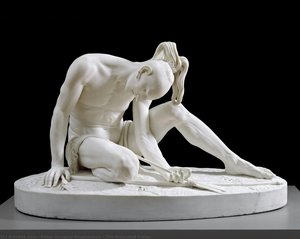
Perhaps no single work encapsulates the gravity of Stephenson’s vision more than his 1986 masterpiece, The Wounded Indian. This monumental sculpture serves as a cornerstone of his career and a haunting symbol of the human condition. Through this piece, the artist explores the intersection of suffering and transformation, using the permanence of bronze to capture a moment of profound emotional exposure. The work does not merely represent a subject; it embodies a state of being, inviting the viewer to witness the delicate balance between destruction and the will to endure.
The significance of his contribution to contemporary sculpture is found in this very refusal to look away from discomfort. His achievements are marked by several key artistic pillars:
- Mastery of Materiality: The use of bronze and textured surfaces to evoke tactile empathy and emotional depth.
- Expressionist Influence: A sophisticated integration of German Expressionist techniques into a contemporary Australian context.
- Thematic Depth: An unwavering focus on the exploration of trauma, vulnerability, and the psychological landscape of identity.
- Global Resonance: The ability to create works, such as those held in the Chrysler Museum of Art, that speak to universal human experiences across cultural boundaries.
Today, based in Tasmania, Stephenson continues to command respect within the international art community. His legacy is not merely found in the physical objects he has created, but in the way his work challenges the viewer to find beauty within the broken and strength within the wounded. Through his hands, the heavy weight of bronze becomes a vessel for the lightness of hope, ensuring his place as a vital figure in the history of figurative expressionism.